
Authentic Korean Japchae Noodles Recipe
**Introduction**
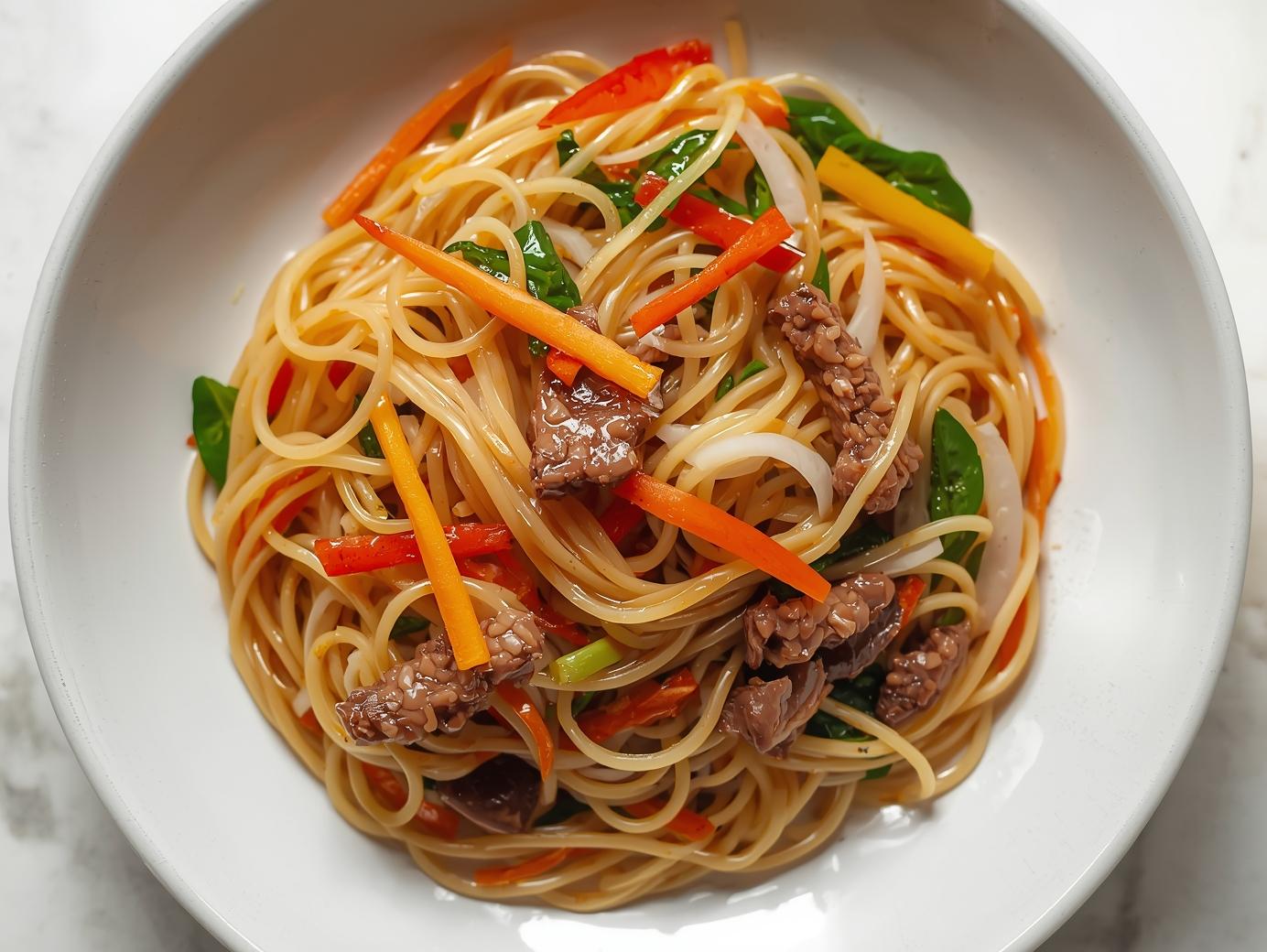
Japchae is a celebration of texture and harmony, a beloved Korean dish that is as beautiful as it is delicious. Featuring springy, translucent sweet potato starch noodles tossed in a savory-sweet sesame sauce, it’s stir-fried with a colorful array of vegetables and often, thinly sliced beef. The overall character is savory, slightly sweet, and wonderfully nutty from the toasted sesame oil. Each bite offers a different combination of textures—from the chewy noodles to the crisp vegetables and tender meat. It’s the star of every Korean festive table, from birthdays to holidays, but is simple enough to make for a satisfying weeknight dinner. Mastering this dish brings a taste of authentic Korean cuisine right into your kitchen.
**Perfect for:**
* Holiday feasts and celebrations.
* A impressive potluck dish.
* Weekend meal prep.
* A satisfying vegetarian main course (see variations).
* Special family dinners.
**Why You’ll Love This Authentic Korean Japchae Recipe**
**Incredibly Flavorful:** The sauce, a perfect balance of soy, sweetness, and toasted sesame oil, coats every ingredient with a deeply savory and aromatic flavor.
**A Textural Dream:** This dish delights with its contrast between the uniquely chewy glass noodles, crisp vegetables, and tender protein.
**Versatile & Customizable:** While traditional, Japchae is adaptable. You can easily adjust the vegetables or protein based on what you have available.
**Great for a Crowd:** This recipe scales up beautifully and is meant to be served at room temperature, making it an ideal make-ahead dish for parties.
**Preparation and Cooking Time**
Total Time: 50 minutes
Preparation Time: 30 minutes
Cooking Time: 20 minutes
Servings: 4 servings
Calories per serving: Approximately 450-500 calories
**Nutritional Information (Per Serving – Estimate):**
**Calories:** 450-500 kcal
**Protein:** 18g
**Carbohydrates:** 70g
**Fat:** 12g
**Fiber:** 5g
**Sugar:** 15g
**Nutritional Disclaimer**
aileen recipes is not a dietician or nutritionist, and any nutritional information shared is only an estimate. We recommend running the ingredients through an online nutritional calculator if you need to verify any information.
**Ingredients**
* 8 ounces (225g) Korean sweet potato starch noodles (dangmyeon)
* 4 ounces (115g) beef sirloin or ribeye, thinly sliced (optional)
* 1 small carrot, cut into matchsticks
* 1 small onion, thinly sliced
* 1 red bell pepper, cut into thin strips
* 2-3 shiitake mushrooms, stems removed and thinly sliced
* 2 handfuls of spinach
* 2 cloves garlic, minced
* 3 green onions, cut into 2-inch lengths
* 2 tablespoons cooking oil
**For the Meat Marinade:**
* 1 tablespoon soy sauce
* 1 teaspoon sugar
* 1/2 teaspoon minced garlic
* Pinch of black pepper
**For the Japchae Sauce:**
* 4 tablespoons soy sauce
* 2 tablespoons sugar (or brown sugar)
* 2 tablespoons toasted sesame oil
* 1 tablespoon toasted sesame seeds
* 1 teaspoon minced garlic
**Step-by-Step Instructions**
1. Prepare the Ingredients: Marinate the sliced beef in the meat marinade ingredients for 15 minutes. Combine all ingredients for the Japchae sauce in a small bowl and set aside. Cut all vegetables as described.
2. Cook the Noodles: Bring a large pot of water to a boil. Add the sweet potato noodles and cook for 7-8 minutes, until tender but still chewy. Drain immediately and rinse with cold water. Using kitchen shears, cut the noodles a few times for easier eating. Place in a large bowl and toss with 1 tablespoon of the Japchae sauce to prevent sticking.
3. Cook the Vegetables and Beef: Work in batches to keep colors and textures distinct. Heat 1/2 tablespoon of oil in a large wok or skillet over medium-high heat. Sauté the carrots for 1 minute, then remove. Add another 1/2 tablespoon of oil and sauté the onion and bell pepper for 1-2 minutes until slightly softened, then remove. Sauté the mushrooms until soft, then remove. Briefly blanch the spinach in the pan or in boiling water for 30 seconds, then rinse in cold water, squeeze out excess liquid, and set aside.
4. Cook the Aromatics and Meat: In the same pan, add the final tablespoon of oil. Add the marinated beef and cook until no longer pink. Add the minced garlic and green onions and stir-fry for one minute until fragrant.
5. Combine Everything: Return all the cooked vegetables and the cooked noodles to the wok with the beef. Pour the remaining Japchae sauce over the top.
6. Toss to Coat: Using tongs or two large spoons, gently toss everything together over medium heat for 2-3 minutes until the noodles are warmed through and everything is evenly coated in the sauce.
**How to Serve Authentic Korean Japchae**
* Serve warm or at room temperature as a main course.
* As part of a Korean meal spread (hansik) with other banchan (side dishes) like kimchi.
* Garnish with extra toasted sesame seeds for a beautiful presentation.
* It is a classic dish for parties and potlucks, served from a large platter.
**Additional Tips for Authentic Korean Japchae**
* Do not overcook the dangmyeon noodles. They should be chewy, not mushy.
* Cooking each vegetable separately preserves their individual color, texture, and flavor, resulting in a superior final dish.
* Toasted sesame oil is non-negotiable for authentic flavor. Do not substitute with plain sesame oil.
* For the best texture, use kitchen shears to cut the noodles after boiling. They are very long and can be difficult to eat otherwise.
**Recipe Variations of Authentic Korean Japchae**
**Vegetarian Japchae:** Omit the beef. Add more mushrooms or include other vegetables like zucchini. Use a vegetarian-friendly soy sauce.
**Chicken or Pork Japchae:** Substitute the beef with thinly sliced chicken breast or pork loin, marinated in the same way.
**Spicy Japchae:** Add 1-2 teaspoons of Gochujang (Korean chili paste) or 1 teaspoon of Gochugaru (Korean chili flakes) to the Japchae sauce.
**Freezing and Storage for Authentic Korean Japchae**
**Storage:** Store leftovers in an airtight container in the refrigerator for up to 4-5 days. Reheat gently in a microwave or in a skillet. The noodles may harden when cold but will soften again when reheated.
**Freezing:** Freezing is not recommended as the texture of the vegetables and noodles can become watery and soft upon thawing.
**FAQ Section about Authentic Korean Japchae**
**What can I use if I can’t find dangmyeon noodles?**
These glass noodles are essential for the authentic texture and flavor. They are available in most Asian grocery stores or online. There is no perfect substitute.
**Can I make Japchae ahead of time?**
Absolutely. Japchae is an excellent make-ahead dish. In fact, the flavors meld together even more when allowed to sit for a few hours. Serve at room temperature.
**My noodles turned out too sticky. What happened?**
This is usually due to not rinsing them thoroughly in cold water after boiling, or not tossing them with a bit of the sauce immediately after draining.
**Is Japchae served hot or cold?**
It is typically served warm or at room temperature. It is rarely served piping hot.
**Conclusion of Authentic Korean Japchae Recipe**
Authentic Korean Japchae is a dish that truly rewards the effort put into it. The process of individually cooking each component comes together in a final toss that creates a harmonious and unforgettable meal. Its signature sweet and savory flavor, combined with the delightful chew of the noodles and the crunch of fresh vegetables, makes it a universally loved dish. Whether you’re celebrating a special occasion or simply exploring the wonders of Korean cuisine, this Japchae recipe is a guaranteed success that will have everyone asking for seconds.