
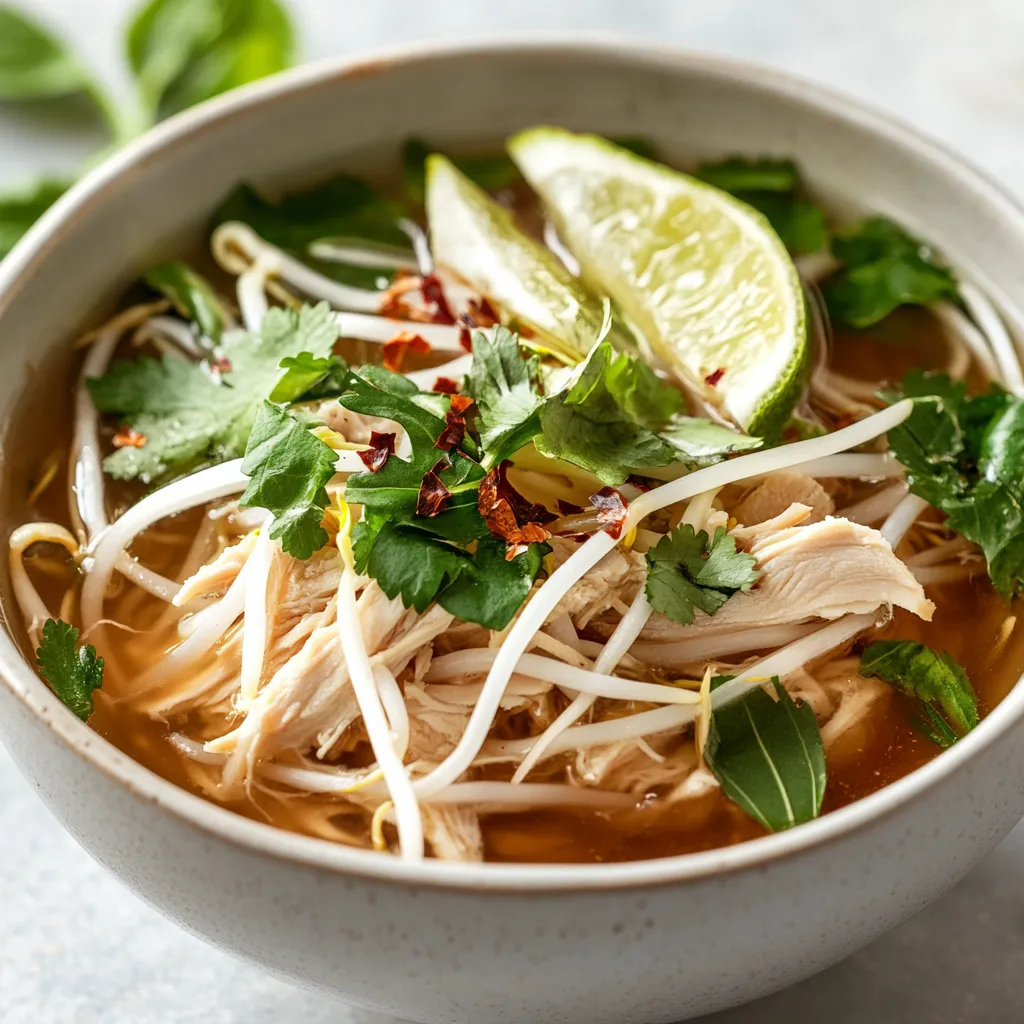
Exquisite Chicken Pho Experience
Introduction
Exploring the rich flavors of traditional Vietnamese cuisine, Chicken Pho is a beloved dish that captivates with its aromatic broth and tender chicken. Pho has been a staple of Vietnamese dining culture for generations, renowned for its harmonious blend of textures and tastes. This comforting dish combines hearty chicken broth with delicate rice noodles, fresh herbs, and various garnishes, making it a meal perfect for sharing with loved ones or enjoying during a quiet evening at home.
Each bowl of Chicken Pho tells a story, beginning with the carefully simmered broth that is both fragrant and flavorful. The process of preparing this dish transforms simple ingredients into a culinary masterpiece, inviting you to experience the warmth and depth of Vietnamese cooking. This comprehensive guide walks you through crafting an exquisite Chicken Pho experience that is perfect for any occasion, whether it is a family dinner or a special gathering with friends.
Recipe Overview
This section provides a snapshot of the Chicken Pho recipe, highlighting key elements that make it exceptional.
Dish Description
Chicken Pho is deeply rooted in Vietnamese culture, often enjoyed as a comforting breakfast or a late-night meal. The dish primarily consists of a soothing broth enriched with spices, coupled with tender chicken and light rice noodles, creating a balanced flavor profile. The aromatic broth is the star of the show, infused with hints of star anise, cinnamon, and ginger that create a warm, inviting taste. Enjoying a bowl of Chicken Pho is not just about nourishment; it is also about the experience of customizing each bowl with a variety of fresh herbs and condiments, allowing for a personal touch to every serving.
Cooking Time and Servings
For this Chicken Pho recipe, the total cooking time is 45 minutes, with a preparation time of approximately 15 minutes. This recipe yields four generous servings, making it an excellent choice for family meals or casual get-togethers where everyone can savor a delicious bowl of homemade Pho.
Nutritional Information
While specific nutritional information is not provided in the recipe, the ingredients used in Chicken Pho contribute a well-rounded mix of protein, vitamins, and minerals. The combination of boneless, skinless chicken breast offers lean protein, while the fresh herbs and lime add vitamins and antioxidants, making this dish both fulfilling and nutritious.
Ingredients
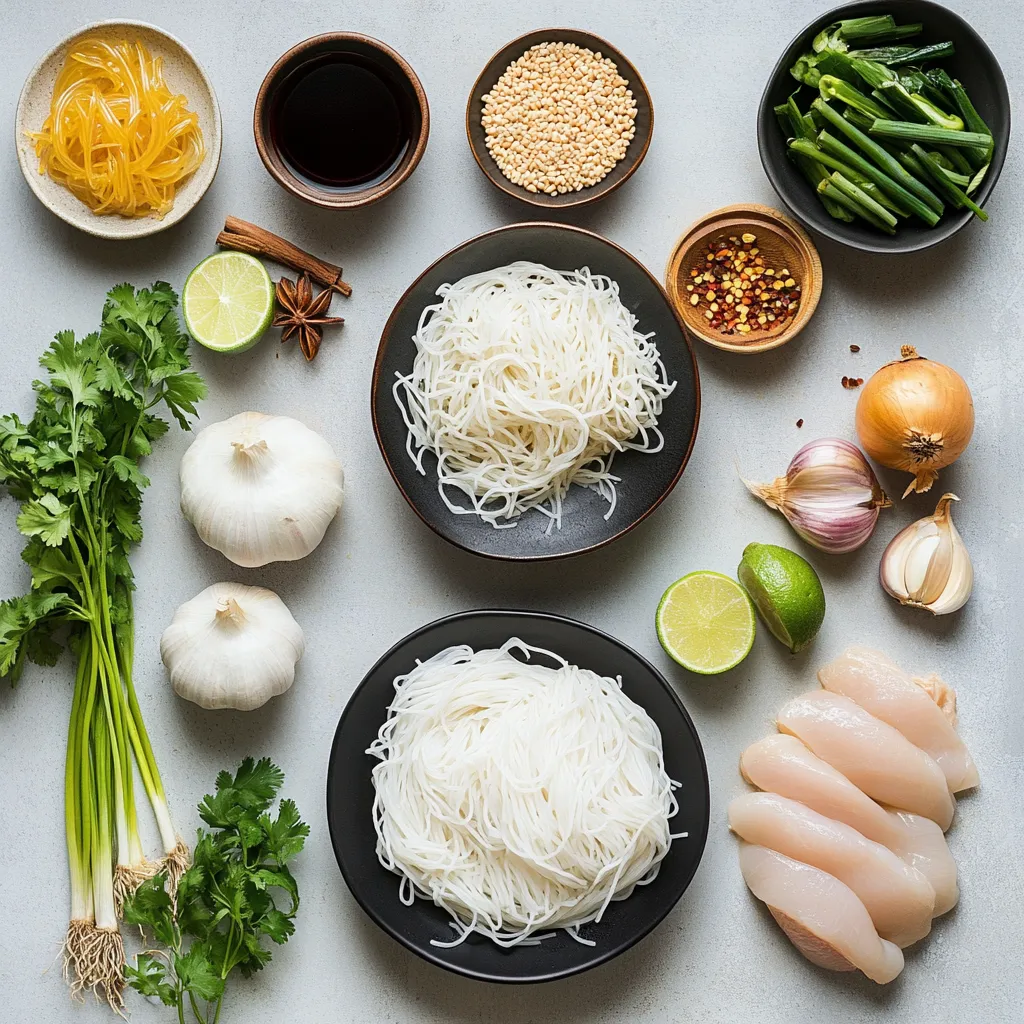
A detailed list of everything required to create the perfect Chicken Pho is essential for an enjoyable cooking experience.
– 1 lb boneless, skinless chicken breast
– 8 cups rich chicken broth
– 1 large onion, cut in half
– 4 cloves garlic, finely minced
– 1-inch piece of fresh ginger, thinly sliced
– 2 star anise pods
– 1 cinnamon stick
– 1 tablespoon fish sauce
– 1 tablespoon soy sauce
– 1 tablespoon sugar
– 8 oz rice noodles
– A handful of fresh herbs (basil, cilantro, mint)
– 1 lime, cut into wedges
– A handful of bean sprouts
– Sliced jalapeños (optional, for heat)
– Chopped green onions
– Hoisin sauce (for drizzling)
– Sriracha (for a spicy kick)
Instructions
1. In a large pot, combine the chicken broth, halved onion, minced garlic, sliced ginger, star anise, and cinnamon stick. Add the fish sauce, soy sauce, and sugar, then bring the mixture to a gentle boil over medium-high heat.
2. Once the broth is boiling, carefully add the chicken breasts to the pot. Reduce the heat to low and allow it to simmer for approximately 20-25 minutes, or until the chicken is cooked through and tender.
3. After cooking, remove the chicken from the pot and set it aside on a cutting board to cool slightly. Strain the broth through a fine-mesh sieve to eliminate the solids (onion, ginger, and spices) and return the clear broth to the pot. Keep the broth warm over low heat.
4. While the broth simmers, cook the rice noodles according to package instructions. Once cooked, drain the noodles and set them aside.
5. Shred the cooked chicken into bite-sized pieces using two forks or your hands.
6. To serve, place a generous portion of rice noodles in a bowl. Top them with the shredded chicken, then ladle the steaming hot broth over the noodles and chicken.
7. Garnish your pho with an array of fresh herbs, bean sprouts, sliced jalapeños (if using), and a sprinkle of chopped green onions. Serve with lime wedges, hoisin sauce, and Sriracha on the side for guests to customize their bowls.
Preparing the Broth
The preparation of the broth is a key step in achieving the authentic flavor that defines Chicken Pho. Start by combining your chicken broth with the halved onion, minced garlic, and sliced ginger in a large pot. These aromatics are crucial as they infuse the broth with depth and character. Adding star anise and a cinnamon stick enhances the traditional flavors synonymous with Vietnamese cooking. As you bring this mixture to a gentle boil over medium-high heat, the fragrant notes begin to envelop your kitchen, inviting anticipation for the meal to come.
Once boiling, carefully introduce the chicken breasts to the pot, allowing them to soak in the rich flavors. It’s vital to reduce the heat to low for a simmer, permitting the broth to gently cook for 20-25 minutes. This slow cooking process ensures the chicken remains tender and juicy.
Cooking the Chicken
Properly cooking the chicken is essential for either maintaining its moistness or achieving that tender shred. After adding the chicken to the pot, keep a close eye on the timer. Using a meat thermometer can be helpful; the chicken should reach an internal temperature of 165°F to ensure safety. Once cooked, remove the breasts from the broth and allow them to cool slightly. This technique not only guarantees tenderness but also avoids overcooking, preserving the natural juices within.
Straining the Broth
Straining the broth after cooking is a fundamental step in creating a clear and refined soup base. Use a fine-mesh sieve to remove the solids like onion, ginger, and spices, leaving you with a beautifully clear broth that captures all the subtle flavors developed during cooking. This straining process is crucial as it eliminates any unwanted texture that could distract from the smooth experience of sipping the broth.
Cooking the Rice Noodles
While the broth simmers, cooking the rice noodles is straightforward but requires attention to the package instructions. Usually, rice noodles need to be soaked in boiling water for a few minutes or boiled just briefly. This technique prepares them perfectly so they can absorb the flavor of the broth. After draining, set the noodles aside until you’re ready to serve, ensuring they remain intact and do not clump together.
Tips for Preventing Noodles from Sticking Together Post-Cooking
To ensure your rice noodles don’t stick together after cooking, it’s essential to follow a few key techniques. After draining the noodles, rinse them under cold water briefly; this not only stops the cooking process but also removes excess starch that can cause sticking. You can also toss the noodles with a small drizzle of oil, which acts as a barrier preventing them from clumping. It’s advisable to avoid letting the noodles sit for too long before serving—ideal timing is to have them ready just before assembling the pho for the freshest texture.
Shredding the Chicken
To achieve tender, shredded chicken, allow the cooked chicken to rest for a few minutes after removing it from the broth. This makes the meat easier to handle and ensures it retains its juices. Use two forks to pull apart the chicken or shred it using your hands for more control. If preferred, a stand mixer with a paddle attachment can be utilized for efficient shredding, but be cautious not to over shred as this can create a mushy texture.
Options for Incorporating Shredded Chicken Back into the Dish
After shredding, you can mix the chicken back into the warm broth for a hearty base before ladling over the noodles. Alternatively, layering the shredded chicken on top of the noodles allows for a more aesthetic presentation, letting the diner mix the chicken into the broth as they eat.
Assembling the Pho
Assembling your pho with care visually enhances the dining experience. Begin with a base of rice noodles in each bowl, aiming for an equal, generous portion that allows guests to enjoy their meal fully. Aim for about 1-1.5 cups of cooked noodles per serving, depending on individual appetite.
Serving the Noodles
When portioning the rice noodles, a fork or tongs can be used to grab the right amount, ensuring they’re gently placed, not crammed, into the bowl. It’s best to layer the noodles creatively, allowing them to peak through the broth, adding visual intrigue to the dish while providing an even distribution.
Adding Broth and Chicken
To maintain the ideal broth temperature, ensure your broth is steaming hot when it comes time to serve. Ladle the hot broth over the noodles and chicken carefully, sufficient enough to submerge but not too much as to drown the fresh ingredients. This technique allows the diners to savor the layers of flavor and texture.
Garnishing Techniques
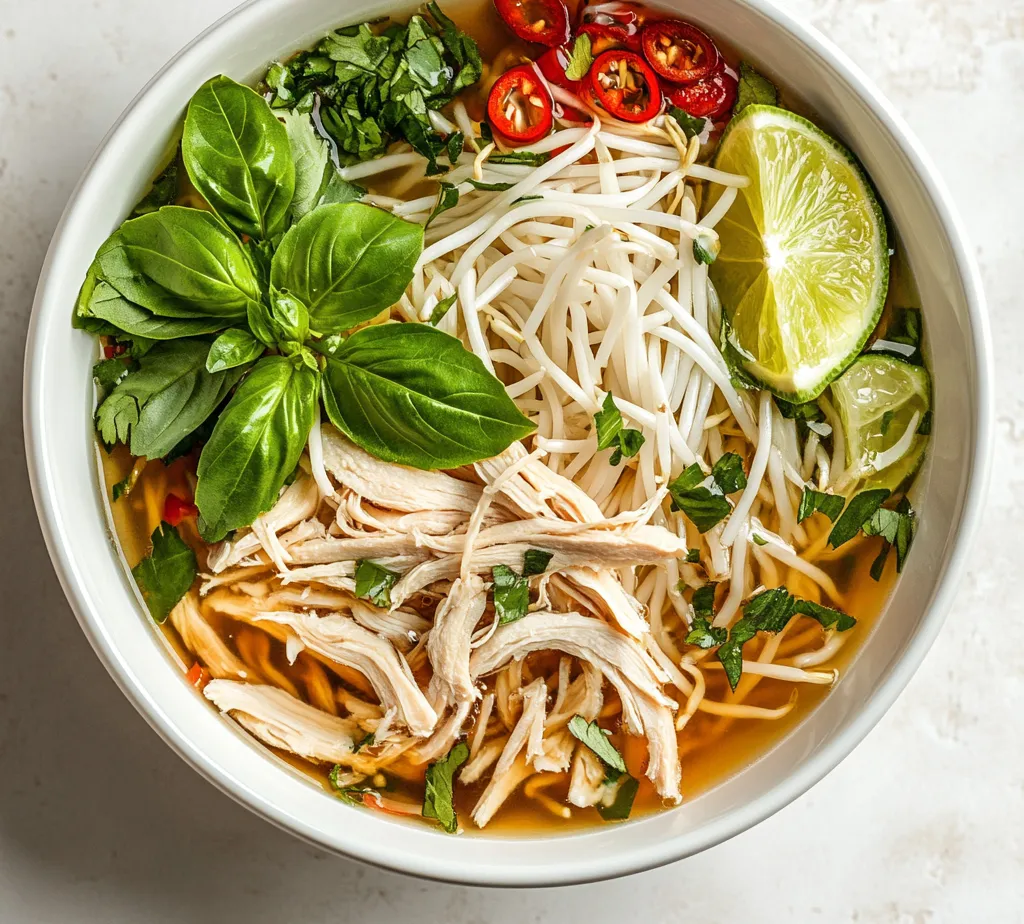
Garnishing is an essential aspect of pho; it adds freshness and flavor. Use a mix of vibrant herbs such as basil, cilantro, and mint, placing them generously on top of the bowl. This not only provides a beautiful visual but also allows for the aromas of the herbs to infuse the dish as you eat. Additionally, placing bean sprouts, sliced jalapeños, and green onions in varied sections creates a colorful mosaic and invites guests to customize their dish.
Flavor Customization
One of the beauties of Chicken Pho is its versatility. Diners can personalize their bowls to match their taste preferences.
Personalizing Your Bowl
For some heat, guests can add fresh jalapeños or drizzle in Sriracha to alienate the richness of the broth. Others might prefer the sweetness from hoisin sauce. Offering these condiments on the side encourages interaction and allows for each person to create a unique experience.
Additional Garnishes and Their Flavor Contributions
Incorporate a variety of garnishes for an added flavor spectrum. Thinly sliced radishes can provide crispness, while fresh lime juice adds acidity. Each topping invites your guests to experiment with layers of flavor, enriching the overall dining experience.
Dietary Adjustments
Those following a vegetarian or gluten-free diet will need to make specific substitutions. A vegetable broth can replace the chicken broth, and rice noodles are typically gluten-free; however, it’s always best to check the packaging. For additional protein, tofu is an excellent substitute that soaks up the flavors of the broth beautifully.
Discussing Alternative Proteins
If chicken doesn’t suit everyone’s taste, consider using other proteins like shrimp or beef, which have their traditional pho variations as well. Shrimp cooks quickly and provides a delicate sweet flavor, while thinly sliced beef can be added raw to the hot broth where it cooks gently.
Tradition vs. Modernity
The cultural significance of Chicken Pho plays a crucial role in its presentation and consumption.
Roots of Pho
Pho’s origins trace back to the early 20th century in Vietnam, reflecting a blend of French colonial influences and local culinary practices. Traditionally, pho was prepared with beef, but as it evolved, chicken became a beloved alternative, particularly in home cooking, symbolizing comfort and family.
Modern Twists
Contemporary adaptations of Chicken Pho have introduced a broader array of ingredients influenced by global trends. This includes variations like spicy pho bowls incorporating trendy toppings or fusion versions with unconventional flavors, reflecting the dish’s adaptability.
Serving Suggestions
To create a complete dining experience around your Chicken Pho, consider accompaniments and beverages that complement the meal.
Ideal Accompaniments
Served alongside pho, a simple Asian-style salad with sesame dressing or even spring rolls enhances the dining experience. For beverages, a light, crisp beer or a refreshing iced tea pairs beautifully, cleansing the palate and balancing the meal’s richness.
Presentation Tips
In serving, the use of large, shallow bowls allows all elements to shine, showcasing the vivid colors of fresh garnishes and bright broth. This visual aspect heightens anticipation and cues diners to the fresh, flavorful experience that awaits them.
Conclusion
This exquisite Chicken Pho recipe offers a harmonious blend of flavors and textures, from the savory broth to the tender chicken and fresh garnishes. With a preparation time of just 45 minutes, it is a fulfilling dish that captures the essence of Vietnamese cuisine, perfect for sharing with family and friends.
Exquisite Chicken Pho Experience
Ingredients
- 1 lb boneless skinless chicken breast
- 8 cups rich chicken broth
- 1 large onion cut in half
- 4 cloves garlic finely minced
- 1 inch piece of fresh ginger thinly sliced
- 2 pods star anise
- 1 stick cinnamon
- 1 tablespoon fish sauce
- 1 tablespoon soy sauce
- 1 tablespoon sugar
- 8 oz rice noodles
- 1 handful fresh herbs basil, cilantro, mint
- 1 lime cut into wedges
- 1 handful bean sprouts
- to taste sliced jalapeños optional, for heat
- to taste chopped green onions
- to taste hoisin sauce for drizzling
- to taste Sriracha for a spicy kick
Instructions
- In a large pot, combine the chicken broth, halved onion, minced garlic, sliced ginger, star anise, and cinnamon stick.
- Add the fish sauce, soy sauce, and sugar, then bring the mixture to a gentle boil over medium-high heat.
- Once boiling, carefully add the chicken breasts to the pot and reduce heat to low.
- Allow to simmer for approximately 20-25 minutes, or until the chicken is cooked through.
- Remove the chicken from the pot and set aside to cool slightly.
- Strain the broth through a fine-mesh sieve and return the clear broth to the pot, keeping it warm.
- Cook the rice noodles according to package instructions, then drain and set aside.
- Shred the cooked chicken into bite-sized pieces.
- To serve, place rice noodles in a bowl, top with shredded chicken, and ladle hot broth over them.
- Garnish with fresh herbs, bean sprouts, jalapeños, and green onions, serving lime wedges and sauces on the side.