
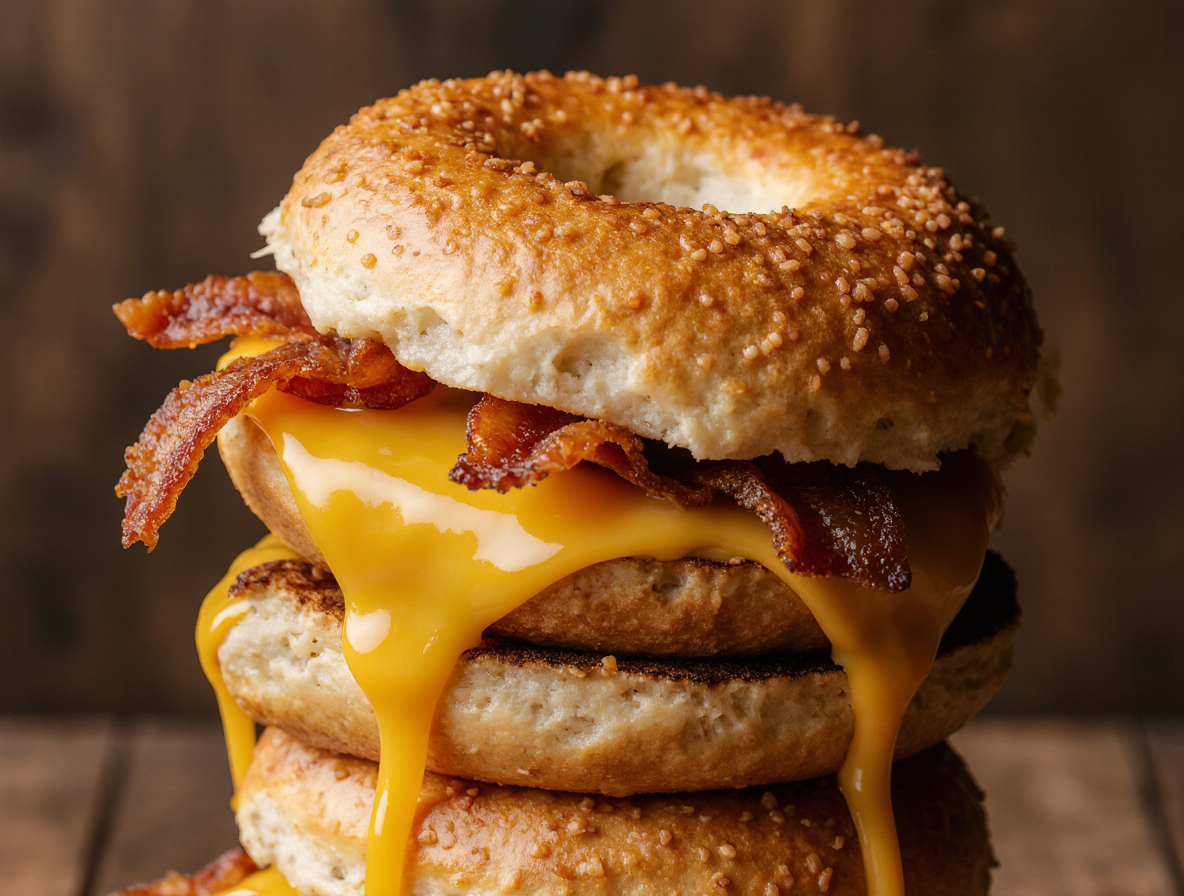
How to Make Perfect Bacon Cheddar Bagels: A Foolproof Recipe Guide

Did you know that each bacon cheddar bagel packs approximately 25 grams of protein? That’s right – these aren’t just delicious, they’re nutritional powerhouses too!
When we opt for homemade bacon cheese bagels instead of fast food, we’re making a choice that benefits both our taste buds and our health. Studies show that people who prepare meals at home tend to consume fewer calories compared to eating out. Plus, these cheddar cheese bagels give all the boujee brunch vibes without having to serve up lox. After making a breakfast sandwich on one of these bad boys, I don’t think I’ll ever be the same again!
The best part? This cheesy bagel recipe is incredibly versatile. You can easily double or triple the recipe depending on how many bagels you want to make. Whether you’re a seasoned baker or trying your hand at homemade bagels for the first time, our foolproof guide will walk you through creating the perfect bacon and cheese bagel from scratch.
Ready to transform your breakfast game with these irresistible treats? Let’s dive in!
Gathering Ingredients and Tools
Creating perfect bacon cheddar bagels starts with gathering quality ingredients and proper tools. The right combination will ensure your bagels have that distinctive chewy texture and savory flavor that makes them irresistible.
Essential ingredients for the dough
The foundation of any great bacon cheddar bagel begins with the right flour. For authentic chewy texture, bread flour with at least 12% protein content is essential. Some recipes suggest self-rising flour as an alternative, though this creates a different texture profile.
For the perfect dough, you’ll need:
- Bread flour: 4½-4¾ cups for a batch of bagels
- Yeast: 1½ tablespoons active dry yeast
- Sweetener: 1 tablespoon brown sugar or maple syrup
- Salt: 2 teaspoons, preferably kosher salt
- Warm water: 2 cups at 105°F-113°F to properly activate the yeast
Additionally, some recipes incorporate everything bagel seasoning directly into the dough for extra flavor.
Best cheese and bacon for flavor
For the signature flavor profile of a bacon cheese bagel, quality ingredients make all the difference. Shredded cheddar cheese works best, with most recipes calling for 1½-2 cups. The cheese should be divided—about ½ cup incorporated into the dough and the remainder reserved for topping.
Furthermore, when it comes to bacon, skip the shelf-stable bits. Real, freshly cooked bacon creates superior flavor. Use approximately ½ cup of chopped bacon bits in the dough and reserve ¼ cup for topping. The bacon can be prepared up to five days in advance and refrigerated, or even frozen for up to a month.
Recommended kitchen tools
Professional-quality bagels don’t require professional equipment. First, a kitchen scale helps measure ingredients precisely for consistent results. A stand mixer with a dough hook attachment saves approximately 15 minutes of kneading compared to doing it by hand.
Moreover, you’ll need a clear container with a lid for proofing, allowing you to monitor the dough’s rising progress. For boiling, use a large stainless steel pot (minimum six-quart capacity) and a spider strainer or fish spatula to retrieve the bagels without damaging their shape.
Finally, durable, non-stick baking sheets or a baking stone provide ideal heat distribution for developing that perfect crispy crust.
Making the Dough and First Rise
The magic of a perfect bacon cheddar bagel begins with proper dough preparation. The process requires attention to detail, yet remains approachable even for first-time bagel makers.
Activating the yeast properly
Initially, I combine warm water (between 105°F-113°F), yeast, and either brown sugar or malt syrup in a small bowl. This combination feeds the yeast and kickstarts fermentation. It’s crucial to let the mixture sit undisturbed for about 5-6 minutes until it becomes foamy and bubbly. Rather than vigorously whisking, I allow the yeast to rest on the water’s surface to begin its magic. If using instant yeast, you can skip this step and add it directly with the dry ingredients.
Mixing and kneading the dough
Once the yeast is activated, I add it to the flour and salt mixture. For my bacon cheese bagel, I incorporate about ½ cup each of chopped bacon and shredded cheddar directly into the dough. Using a stand mixer with a dough hook, I mix on low speed for 2 minutes until the dough forms a ball and pulls away from the sides. Subsequently, I knead for an additional 6-7 minutes until smooth and elastic.
If kneading by hand, prepare for a workout—bagel dough requires about 10-15 minutes of vigorous kneading. The dough should feel stiff and slightly tacky but not sticky. A properly kneaded dough passes the “windowpane test”—when stretched thin, it allows light to pass through without tearing.
Letting the dough rest and rise
After kneading, I form the dough into a tight ball and place it in an oiled bowl, turning to coat all sides. Prior to covering with plastic wrap or a damp towel, I ensure the dough is completely sealed. The first rise (bulk fermentation) takes approximately 1-1.5 hours at room temperature. The desired dough temperature is around 75°F. Given that bagel dough is stiffer than standard bread dough, it won’t double in size but should noticeably expand and become puffy.
Shaping, Boiling, and Topping the Bagels
The transformation from dough ball to beautiful bacon cheddar bagel happens through careful shaping and cooking techniques. Mastering these steps ensures your homemade bagels have that professional look and authentic texture.
How to shape perfect bagels
After your dough has completed its first rise, it’s time for shaping. Start by cutting the dough into 8 equal pieces using a sharp knife or bench scraper. For consistent results, consider the “poke-and-stretch” method—form each piece into a tight ball, press your thumb through the center, and gently rotate while stretching to create a hole approximately 1.5-2 inches wide. This larger-than-expected hole prevents closure during boiling.
Alternatively, try the traditional “rope-and-loop” method used by professionals. Roll each portion into an 8-10 inch rope, overlap the ends, and seal them by rolling the connection point against your work surface.
Allow the shaped bagels to rest for about 30 minutes under plastic wrap before boiling. This final proofing helps develop proper structure while maintaining the dense, chewy texture bagels are known for.
Boiling for texture and shine
Meanwhile, prepare a large pot with approximately 4 inches of water and bring it to a rolling boil. Gently place bagels into the water, boiling for about 1 minute per side. For thinner crusts and airier texture, reduce boiling time to 45 seconds per side; for chewier results, extend to 90 seconds.
This boiling step is absolutely crucial—it gelatinizes the starches on the surface, creating that distinctive shiny coating and ensuring bagels maintain their shape during baking. Some bakers add honey or barley malt syrup to enhance caramelization and crispness.
Adding cheddar and bacon toppings
Immediately after removing bagels from the water with a slotted spoon, it’s the perfect moment to add toppings. The wet, tacky surface helps ingredients adhere properly. Quickly top each bagel with shredded cheddar cheese and bacon bits.
For optimal results, work efficiently—top the first batch while the second batch boils. Under those circumstances, your bacon cheese bagels will have perfectly melted cheese and crispy bacon bits after baking for 15-17 minutes at 425°F.
Baking, Storing, and Reheating Tips
The final steps in crafting your bacon cheddar bagels involve proper baking, storage, and reheating techniques that preserve their delightful texture and flavor.
Baking time and temperature guide
For perfect bacon cheese bagels, preheat your oven to 425-475°F, depending on your oven’s characteristics. Generally, bake at 425°F for 15-17 minutes or until golden brown. For darker crusts, consider the higher end of the temperature range. You’ll know your cheddar cheese bagels are done when the tops develop a rich golden-brown color. Certainly, if you notice the cheese or bacon bits browning too quickly, tent the bagels with foil halfway through baking.
How to store bagels for freshness
Contrary to common practice, never refrigerate your bacon and cheese bagels—this actually accelerates staling. Instead, place freshly cooled bagels in paper bags at room temperature. This method preserves their texture and flavor for 1-2 days. For extended freshness (up to 5 days), place the paper bag inside an unsealed plastic bag. Obviously, your cheesy bagel recipe creations taste best on the day they’re baked.
Freezing and reheating instructions
Essentially, freezing is the ideal solution for long-term storage. First thing to remember: slice your bagels before freezing. Wrap each half individually in plastic wrap or foil, then place in a freezer-safe bag. Frozen bacon cheddar bagels maintain quality for approximately 3-4 months.
For reheating, avoid microwaves as they destroy texture. Important to realize, the best method involves preheating your oven to 350-400°F and baking for 4-10 minutes. Of course, for frozen bagels, either toast the slices directly from frozen or thaw at room temperature for 20-30 minutes before heating. To revive stale bagels, spritz with water before heating to restore moisture.
Conclusion
These bacon cheddar bagels truly represent the perfect marriage of convenience, nutrition, and incredible flavor. After following this comprehensive guide, you’ll find yourself equipped with all the knowledge needed to create bakery-quality bagels right at home. Most importantly, your homemade creations deliver approximately 25 grams of protein per bagel while providing complete control over ingredients.
Throughout this journey, we’ve explored everything from selecting the right flour to mastering the distinctive bagel-shaping techniques. The critical boiling step, therefore, remains non-negotiable for achieving that signature chewy texture and glossy exterior. Additionally, our cheese and bacon incorporation methods ensure perfect distribution of flavor throughout each bite.
Remember that patience plays a crucial role during the proofing and resting periods. This seemingly simple waiting time actually allows the dough to develop its characteristic texture and flavor profile. Consequently, rushing through these steps might compromise your final results.
My favorite aspect of this recipe remains its flexibility. You can easily double the batch size, experiment with different cheese varieties, or adjust bacon quantities based on personal preference. Eventually, you might develop your own signature variation that friends and family request by name!
Whether enjoyed fresh from the oven or properly stored for later consumption, these bacon cheddar bagels will transform your breakfast routine. Undoubtedly, once you’ve mastered this foolproof method, store-bought alternatives will pale in comparison. So grab your ingredients, set aside some time, and prepare for a baking experience that delivers professional results with homemade satisfaction!
FAQs
Q1. What’s the key to making delicious homemade bagels? The secret lies in using a wetter dough for crispier bagels, embracing high-gluten flour, and boiling the bagels before baking. This process creates the signature chewy texture and shiny exterior that defines a great bagel.
Q2. How do you incorporate bacon and cheese into bagels? For bacon cheddar bagels, mix about 1/2 cup each of chopped bacon and shredded cheddar directly into the dough. After boiling, top the bagels with additional cheese and bacon bits before baking to ensure a perfect distribution of flavors.
Q3. Is there a special ingredient that makes bagels unique? While not exactly secret, malt syrup or powder added to the boiling water is a key ingredient that contributes to the distinctive flavor and texture of traditional bagels.
Q4. Why is boiling bagels before baking important? Boiling bagels is crucial as it gelatinizes the starches on the surface, creating a shiny coating and ensuring the bagels maintain their shape during baking. This step is essential for achieving the authentic bagel texture and appearance.
Q5. How should I store homemade bagels to keep them fresh? For optimal freshness, store cooled bagels in paper bags at room temperature for 1-2 days. Avoid refrigerating as it accelerates staling. For longer storage, freeze sliced bagels wrapped individually, where they’ll maintain quality for 3-4 months.