
Philly Cheesesteak Pasta Skillet Recipe
Introduction
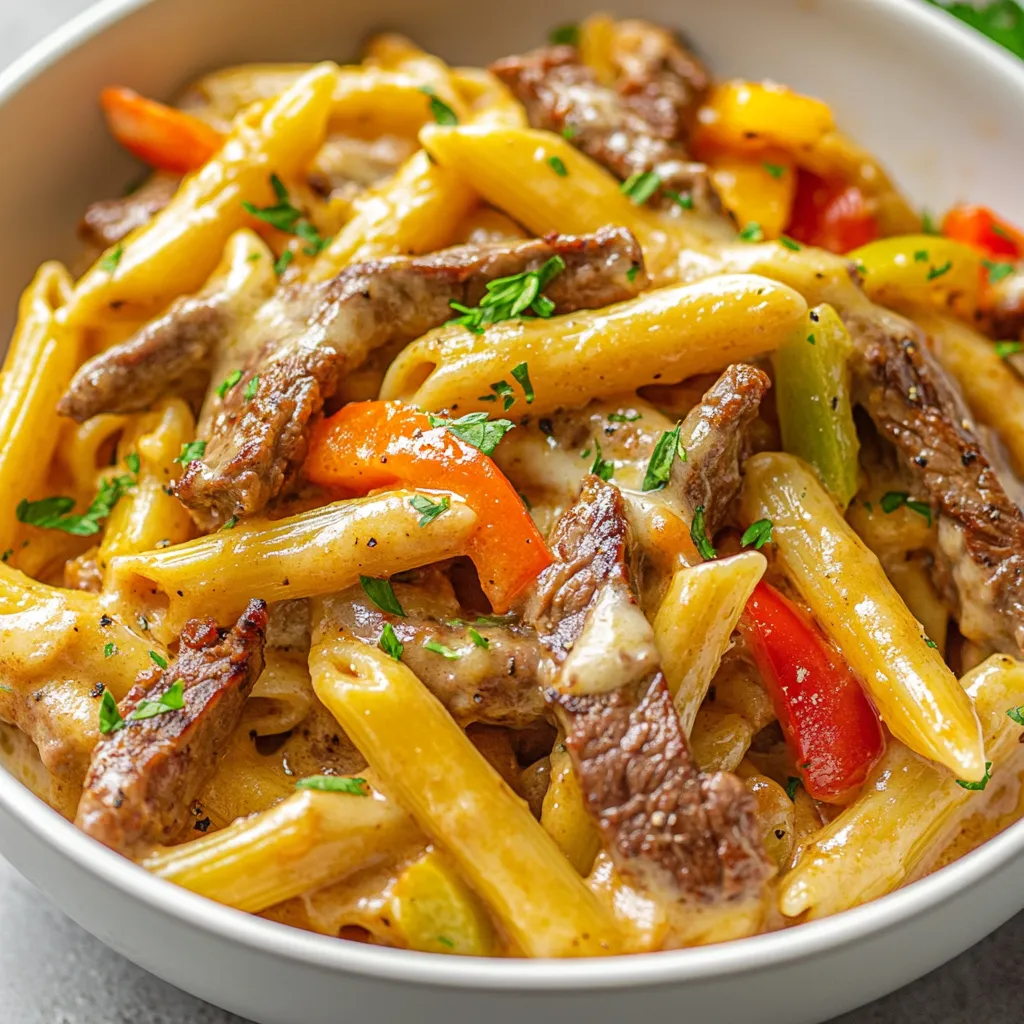
The fusion of classic flavors comes alive in the delightful Philly Cheesesteak Pasta Skillet. This mouthwatering dish combines the heartiness of a traditional cheesesteak with the comfort of pasta, making it an ideal choice for weeknight dinners or gatherings. Imagine tender sirloin steak complemented by sautéed bell peppers and onions, all enveloped in a rich, creamy sauce and perfectly al dente pasta. Each bite is a flavorful reminder of the iconic sandwich it draws inspiration from.
The Philly Cheesesteak Pasta Skillet is not just about taste; it’s about bringing comforting ingredients together in a way that is both satisfying and nourishing. This recipe is easy to follow, making it accessible even for those with limited cooking experience. In this article, we’ll guide you through each step, ensuring you can create a delectable meal that tantalizes your taste buds while maintaining a generous portion size.
With a preparation time of just 10 minutes and a total cooking time of 30 minutes, this dish is perfect for busy evenings when you want something hearty and delicious without the hassle. It’s an ideal solution for anyone longing for a warm and filling meal that doesn’t compromise on flavors.
Recipe Overview
– Total Time: 30 minutes
– Prep Time: 10 minutes
– Servings: 4
– Difficulty: Not specified in the recipe
Ingredients
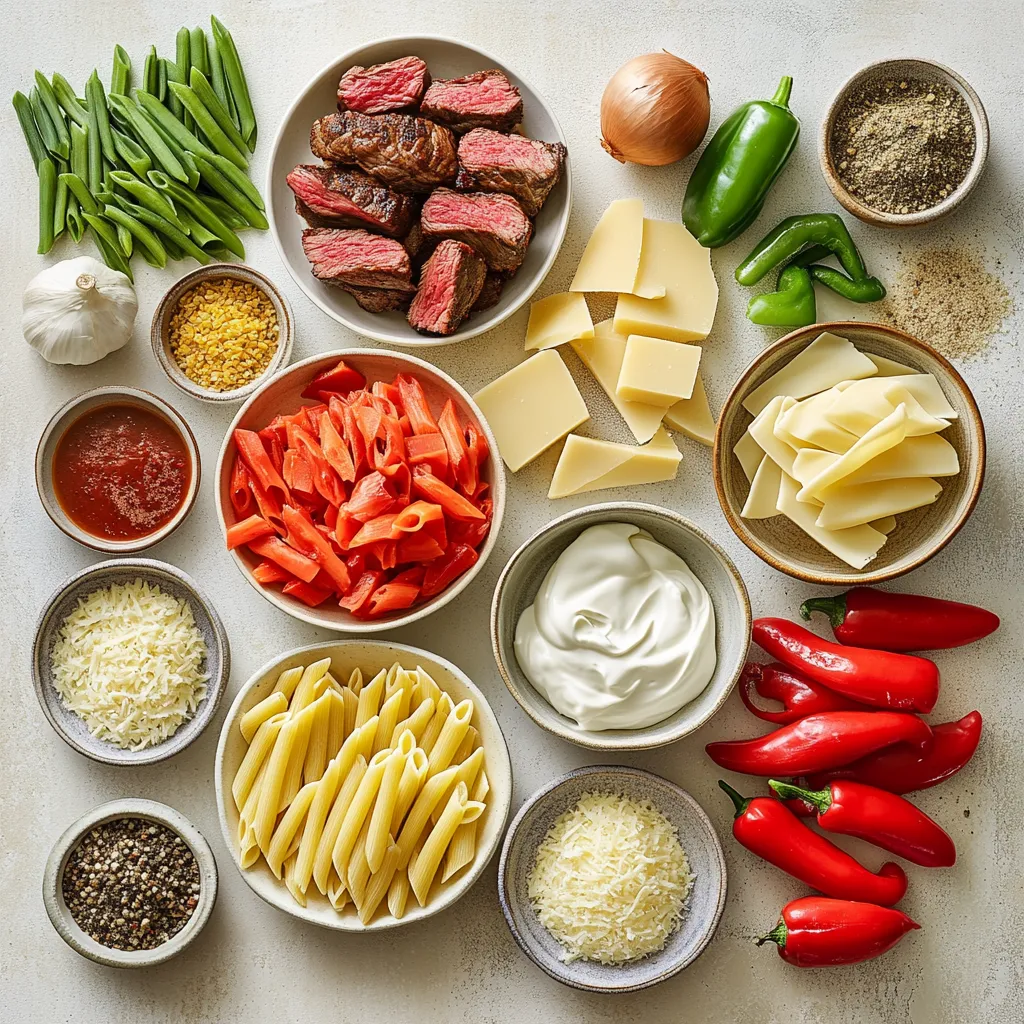
Understanding the ingredients is crucial to mastering this recipe. Each component plays a vital role in delivering flavor and texture.
Essential Ingredients
– 8 oz. penne pasta
– 1 lb. sirloin steak, thinly sliced
– 1 tablespoon olive oil
– 1 medium onion, thinly sliced
– 1 green bell pepper, thinly sliced
– 1 red bell pepper, thinly sliced
– 3 cloves garlic, minced
Flavor Enhancers
– 1 teaspoon Worcestershire sauce
– 1 teaspoon Italian seasoning
– Salt and black pepper, to taste
Creamy Components
– 1 cup beef broth
– 1 cup heavy cream
– 1 cup provolone cheese, shredded
– 1/2 cup grated Parmesan cheese
Garnish
– Fresh parsley, chopped (for garnish)
Instructions
The following steps provide a clear, detailed guide to preparing the Philly Cheesesteak Pasta Skillet. Each part is essential to achieving the perfect balance of flavors and textures.
1. Start by bringing a large pot of salted water to a boil. Add the penne pasta and cook according to the package instructions until al dente. Once done, drain the pasta and set it aside.
2. Heat a large skillet over medium-high heat and add the olive oil. When the oil is shimmering, add the thinly sliced sirloin steak, seasoning it generously with salt and black pepper. Sauté for about 4-5 minutes, or until the steak is nicely browned and cooked to your preferred doneness. Once cooked, remove the steak from the skillet and set it aside on a plate.
3. In the same skillet, add the sliced onion and both the green and red bell peppers. Sauté the vegetables for about 5-7 minutes, stirring occasionally, until they are tender and slightly caramelized. Add the minced garlic and cook for an additional minute, stirring frequently to prevent burning.
4. Return the cooked steak to the skillet with the sautéed vegetables. Add the Worcestershire sauce and Italian seasoning, stirring everything together to combine well.
5. Pour in the beef broth and heavy cream, stirring to mix. Bring the mixture to a gentle simmer and let it cook for about 3-4 minutes, allowing the sauce to thicken slightly.
6. Add the drained penne pasta to the skillet, tossing it gently to ensure the pasta is evenly coated in the creamy sauce.
7. Gradually stir in the shredded provolone and grated Parmesan cheese, mixing until the cheeses are melted and the pasta is creamy. Taste the dish and adjust the seasoning with additional salt and pepper if desired.
8. Remove the skillet from heat and garnish with freshly chopped parsley before serving for a vibrant touch.
Cooking the Pasta
Cooking the pasta correctly is essential for the texture of your dish. Begin by bringing a large pot of salted water to a rolling boil. The salt enhances the flavor of the pasta. Once boiling, add the penne pasta and follow the package instructions closely to ensure it reaches al dente perfection. Al dente pasta has a slight bite to it, which is crucial for maintaining the right texture when mixed with the sauce later on. Once the pasta is cooked, drain it thoroughly and set it aside. Ensuring the pasta is properly cooked will elevate your Philly Cheesesteak Pasta Skillet by contributing to the overall mouthfeel of the dish.
Slicing and Dicing
The foundation of this recipe lies in the preparation of the ingredients. Start with the sirloin steak: it’s important to slice it thinly against the grain to enhance tenderness. Also, slicing the onion and bell peppers into thin strips will not only ensure they cook evenly but also help them meld seamlessly with the steak and pasta. When preparing the garlic, mincing it finely is key; this allows it to release its potent flavor quickly when sautéed. Each of these preparation steps is designed to maximize flavor and ensure that every ingredient shines in the final dish.
Searing the Steak
Searing the steak is a pivotal moment in this recipe. Begin by heating the skillet over medium-high heat until it’s nice and hot, ensuring a good sear when the steak hits the pan. Add the olive oil and let it shimmer before introducing the sirloin slices. Seasoning the steak with salt and black pepper at this stage is critical for enhancing its natural flavor. Sear the steak for about 4-5 minutes, turning it just occasionally for even cooking. Look for a nicely browned exterior to indicate doneness. Once done, remove the steak from the skillet to avoid overcooking, as it will continue to cook slightly when added back to the dish later.
Sautéing the Vegetables
Achieving that perfect sauté for the vegetables requires careful attention to cooking time and technique. After removing the steak, use the same skillet—this helps capture all the flavorful remnants left behind. Start with the sliced onion, cooking it until translucent and slightly caramelized, about 5-7 minutes. Then, add the green and red bell peppers, which take on a vibrant flavor from this cooking process. Timing is key here; the goal is to achieve tenderness without losing the fresh crunch that bell peppers can offer. Finally, garlic should be added for a brief minute to infuse its flavor without burning. The aromas produced during this process create a savory base for the rest of the dish.
Importance of Worcestershire and Italian Seasoning
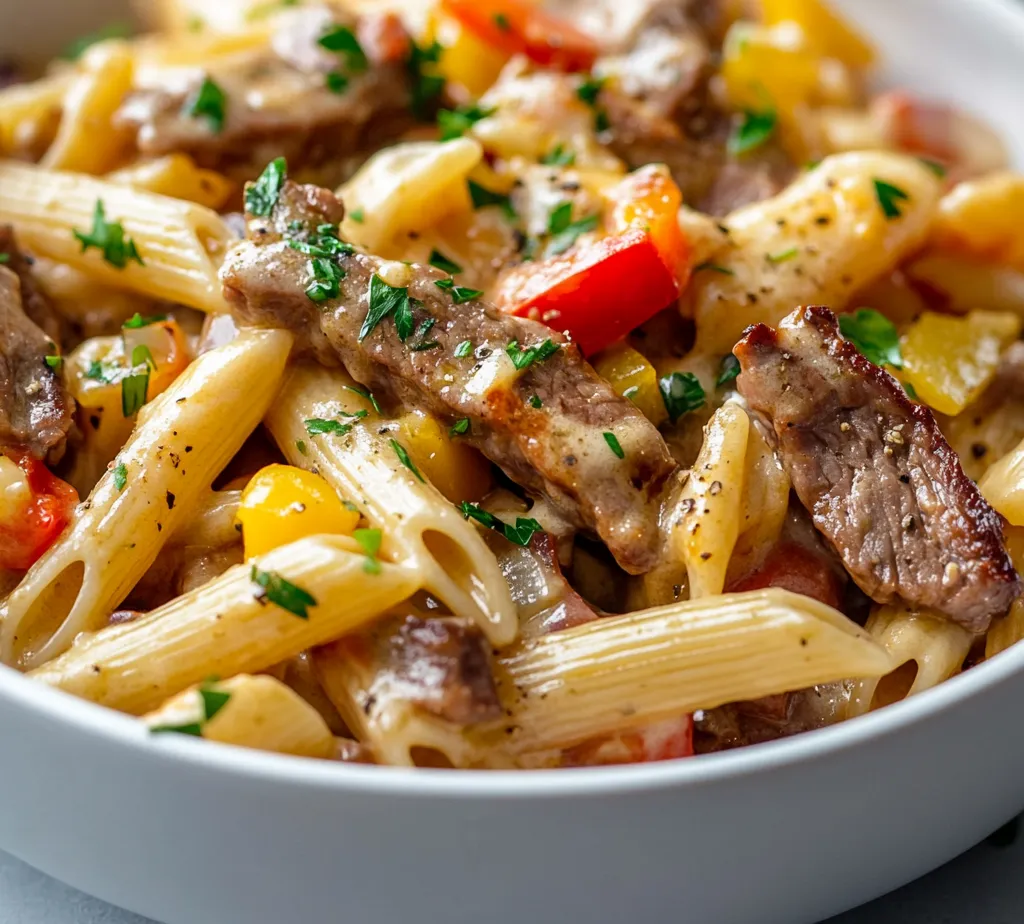
Worcestershire sauce and Italian seasoning play pivotal roles in infusing the Philly Cheesesteak Pasta Skillet with depth and complexity. Worcestershire sauce adds an umami richness that enhances the beef flavor of the sirloin. It contains a balance of savory elements, including vinegar, anchovies, and pickling spices, which deepen the dish’s overall profile.
Italian seasoning, typically a blend of dried herbs such as oregano, basil, and thyme, provides aromatic notes that harmonize beautifully with both the steak and the sautéed vegetables. The herbaceous quality of Italian seasoning complements the creaminess of the sauce, making every bite more balanced and enjoyable.
Adjusting Seasoning to Taste
Since individual palates vary, it’s essential to taste your dish as you cook. After adding the Worcestershire and Italian seasoning, take a moment to sample the sauce. Additional salt and black pepper can help amplify flavors or adjust sweetness and acidity. You may find that you need a dash of acidic brightness from lemon juice or an extra pinch of seasoning to suit your preference perfectly.
Creating the Creamy Sauce
The sauce is the heart of this dish, and special care should be taken to achieve the right consistency.
Adding Broth and Cream
Combining the beef broth and heavy cream is where the magic begins. Incorporate the beef broth first, as it provides a flavorful base that enhances the savory components. When adding the cream, consider its temperature; room-temperature cream blends more easily and prevents curdling.
During the simmering process, pay attention to texture. Stir gently, allowing the flavors to meld while the sauce thickens to a velvety consistency. Signs that the sauce is ready for pasta include a noticeable thickness that coats the back of a spoon, which indicates it will adhere well to the penne.
Incorporating Cheese
Incorporating cheese requires a bit of strategy to achieve that luscious, creamy texture. Gradual addition is key; start with a handful of provolone cheese, stirring until it melts into the sauce before adding more. This method ensures that each bit of cheese is properly melted and the sauce maintains a smooth consistency.
Adjust flavors with salt and pepper at this stage, recognizing that the cheeses can also contribute saltiness. This is the perfect time to fine-tune the balance, so don’t hesitate to taste a spoonful before moving on-ensure your seasonings are harmonized with the creamy sauce.
Mixing in the Pasta
Connecting the pasta with the sauce is integral to the dish’s appeal.
Coating the Penne
Once the pasta is cooked and drained, add it to the skillet with the sauce. The goal here is to ensure even distribution, allowing each piece of penne to be lovingly coated in the rich, creamy sauce.
Using tongs or a spatula, toss the pasta gently, ensuring that every piece is enveloped in the delicious mixture. This is where timing becomes crucial; mixing the pasta in immediately after cooking helps it absorb the flavors of the sauce while still retaining its al dente texture.
Serving Suggestions
Presentation enhances the dining experience, making it visually appealing.
Bowl vs. Platter
When it comes to serving, bowl presentations often provide a more intimate setting, allowing guests to enjoy a generous portion without the mess of a platter. Individual servings also enhance plating while allowing for personal garnishing preferences.
For creative plating, consider layering the pasta in a bowl, sprinkling additional cheese or fresh herbs on top to create height and visual interest. For a more casual affair, a large platter can encourage family-style dining, letting guests help themselves.
Additional Garnishes
Enhancing the visual appeal can be as simple as adding extra garnishes. For those who can’t resist cheese, a sprinkle of grated Parmesan or a handful of additional provolone on top provides an irresistible touch of luxury. A light drizzle of high-quality olive oil not only boosts flavor but also adds a beautiful sheen.
For a pop of color and freshness, fresh herbs like basil, chives, or even arugula can be used instead of parsley, giving the dish an extra layer of flavor and sophistication.
Nutritional Insights
Understanding the nutritional content can enhance your culinary experience.
Breakdown of Key Ingredients
Each component of this dish contributes to its nutritious profile. The sirloin steak serves as a significant protein source, essential for building and repairing tissues. Bell peppers are not just colorful; they also provide vitamins A and C, supporting overall health and immunity. The heavy cream, while deliciously rich, is higher in calories and fat, so be mindful of portion sizes.
Modifications for Healthier Options
If you’re considering lighter alternatives, options exist without losing the integrity of the dish. For instance, using half-and-half instead of heavy cream maintains creaminess while reducing calories. Leaner cuts of beef or even swapping in chicken breast could lower the fat content. Those seeking a vegetarian adaptation might replace the steak with a medley of mushrooms, ensuring flavor depth while keeping the dish satisfying.
Ideal Pairings
Enhance your meal further by considering what to serve alongside.
Wine Pairings
To complement the rich flavors of the Philly Cheesesteak Pasta Skillet, opt for a medium-bodied red wine. Choices such as Cabernet Sauvignon or Merlot play well with the savory steak. Alternatively, if you prefer white wine, a crisp Chardonnay pairs nicely, especially if lightly wooded, bringing out the creaminess of the dish.
Side Dishes
A light salad can beautifully balance the richness of this pasta dish. Ideas include a simple arugula salad with lemon vinaigrette, which adds brightness. Additionally, crusty bread such as garlic bread or a baguette is perfect for soaking up the leftover sauce.
Conclusion
Philly Cheesesteak Pasta Skillet is a delightful combination of savory steak, colorful vegetables, and rich cheeses, resulting in a dish that is creamy and satisfying. It goes from ingredients to a succulent meal in just 30 minutes, making it perfect for any occasion. The variety of textures and flavors contribute to a comforting yet indulgent dining experience, ensuring that each bite is truly enjoyable.
Philly Cheesesteak Pasta Skillet Recipe
Ingredients
- 8 oz. penne pasta
- 1 lb. sirloin steak thinly sliced
- 1 tablespoon olive oil
- 1 medium onion thinly sliced
- 1 medium green bell pepper thinly sliced
- 1 medium red bell pepper thinly sliced
- 3 cloves garlic minced
- 1 teaspoon Worcestershire sauce
- 1 teaspoon Italian seasoning
- Salt and black pepper to taste
- 1 cup beef broth
- 1 cup heavy cream
- 1 cup provolone cheese shredded
- ½ cup grated Parmesan cheese
- Fresh parsley chopped (for garnish)
Instructions
- Bring a large pot of salted water to a boil and cook the penne pasta until al dente, then drain and set aside.
- Heat a large skillet over medium-high heat, add olive oil, and sauté the sirloin steak seasoned with salt and pepper until browned, then remove from skillet.
- In the same skillet, sauté the sliced onion and bell peppers until tender, then add minced garlic and cook for an additional minute.
- Return the cooked steak to the skillet, add Worcestershire sauce and Italian seasoning, and mix well.
- Pour in beef broth and heavy cream, bring to a simmer, and cook for 3-4 minutes to thicken the sauce.
- Add the drained penne pasta, tossing to coat in the sauce.
- Stir in shredded provolone and grated Parmesan cheese until melted and creamy, adjusting seasoning if needed.
- Garnish with chopped parsley before serving.