
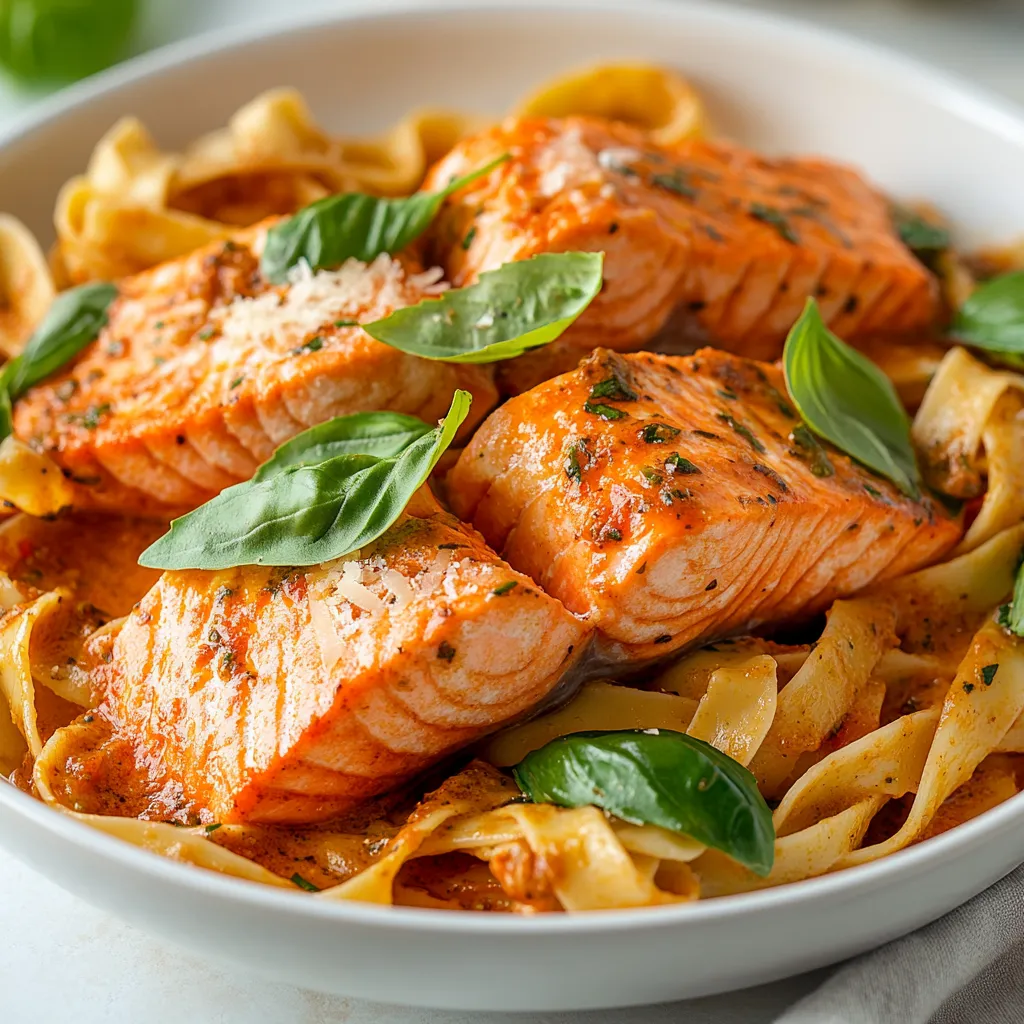
Salmon in Creamy Red Pesto Sauce
Introduction
In the world of culinary delights, few dishes can compete with the rich flavors and comforting textures of salmon in creamy red pesto sauce. This recipe not only elevates the natural taste of salmon but pairs it beautifully with a decadent sauce that is both simple to make and deeply satisfying. Salmon fillets, cooked until flaky and tender, are enveloped in a luxurious combination of heavy cream and vibrant red pesto, making this dish a standout. The incorporation of fresh lemon zest and juice adds a zesty brightness, thus balancing the richness of the creamy sauce.
Ideal for both casual weeknight dinners and more elaborate gatherings, this recipe for salmon in creamy red pesto sauce can easily impress family and friends alike. The blend of flavors creates a gastronomic experience that is both indulgent and comforting. As you embark on this cooking adventure, you will discover how easy it is to create a restaurant-quality meal right in your own kitchen.
Recipe Overview
This dish features perfectly pan-seared salmon fillets enveloped in a creamy red pesto sauce, finished with fresh lemon zest and a sprinkle of basil. It’s served over a bed of your favorite pasta, creating a harmonious blend of flavors that are sure to impress. Here’s a quick look at what you can expect.
– Total Time: 25 minutes
– Prep Time: 10 minutes
– Servings: 4
– Difficulty: Not specified in the recipe
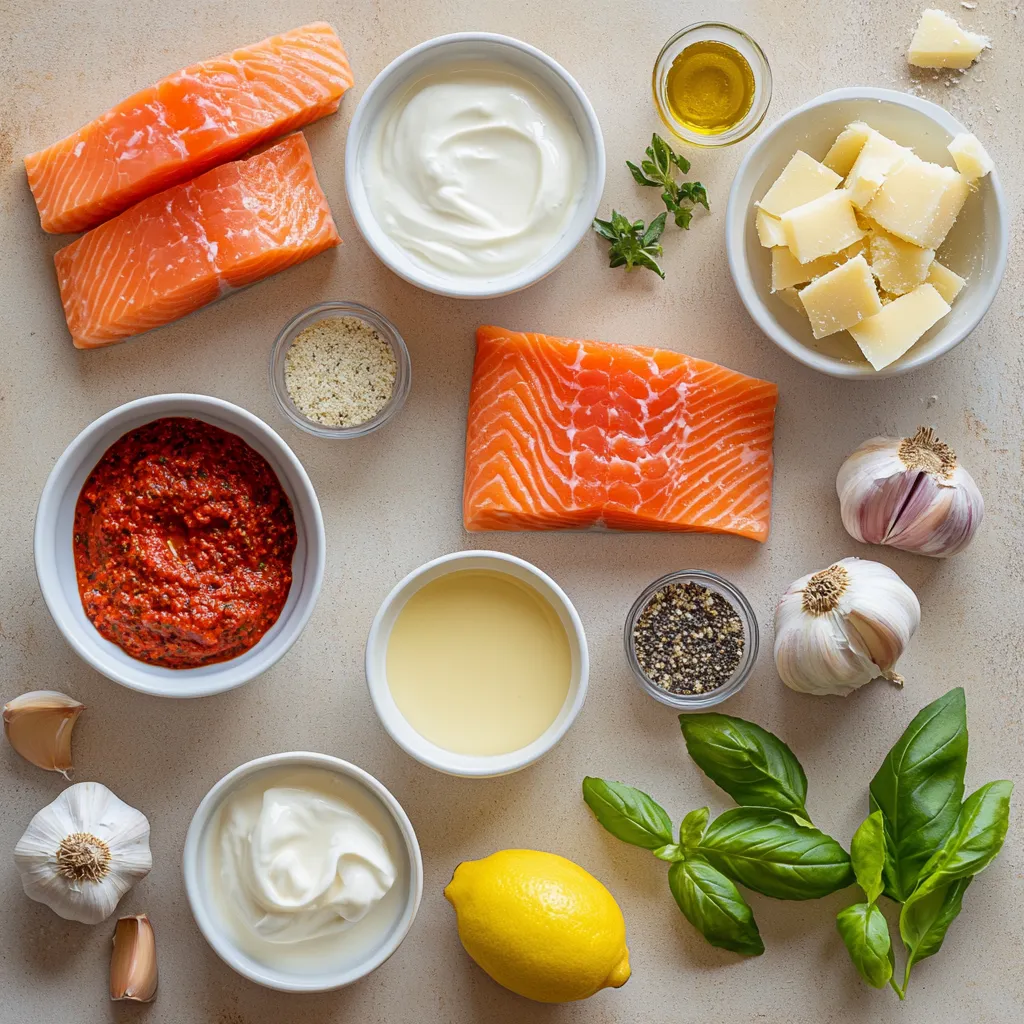
Ingredients
– 4 salmon fillets (approximately 6 ounces each)
– 1 cup heavy cream
– 1/2 cup red pesto (store-bought or homemade)
– 2 tablespoons extra virgin olive oil
– 2 cloves garlic, finely minced
– 1 teaspoon fresh lemon zest
– 1 tablespoon freshly squeezed lemon juice
– Salt and freshly ground black pepper to taste
– Fresh basil leaves for garnish
– Cooked pasta of your choice (such as fettuccine or penne) for serving
– Grated Parmesan cheese for serving (optional)
Instructions
1. Prepare the Salmon: Begin by seasoning the salmon fillets generously with salt and freshly ground black pepper on both sides. Set them aside to allow the flavors to meld.
2. Cook the Salmon: In a large skillet, heat the extra virgin olive oil over medium heat. Once the oil is shimmering, carefully place the salmon fillets in the skillet with the skin-side down. Cook for approximately 4-5 minutes on each side, or until the salmon is cooked through and flakes easily when tested with a fork. Once done, remove the salmon from the skillet and set it aside on a plate.
3. Create the Creamy Sauce: In the same skillet, add the minced garlic and sauté for about 30 seconds, or until it becomes fragrant. Next, pour in the heavy cream and stir it in thoroughly. Incorporate the red pesto, lemon zest, and lemon juice, mixing until everything is fully combined. Allow the sauce to simmer gently for about 3-4 minutes, stirring occasionally, until it thickens slightly.
4. Combine Salmon and Sauce: Carefully return the cooked salmon to the skillet, nestling it into the creamy red pesto sauce. Spoon some of the sauce over the top of the salmon to coat it evenly. Let it cook for an additional 2 minutes to ensure everything is heated through.
5. Serve: To serve, place the salmon on a generous bed of your cooked pasta. Drizzle additional creamy red pesto sauce over the top, and finish with a garnish of fresh basil leaves. If desired, sprinkle with grated Parmesan cheese for an extra touch of flavor.
Presentation Tips
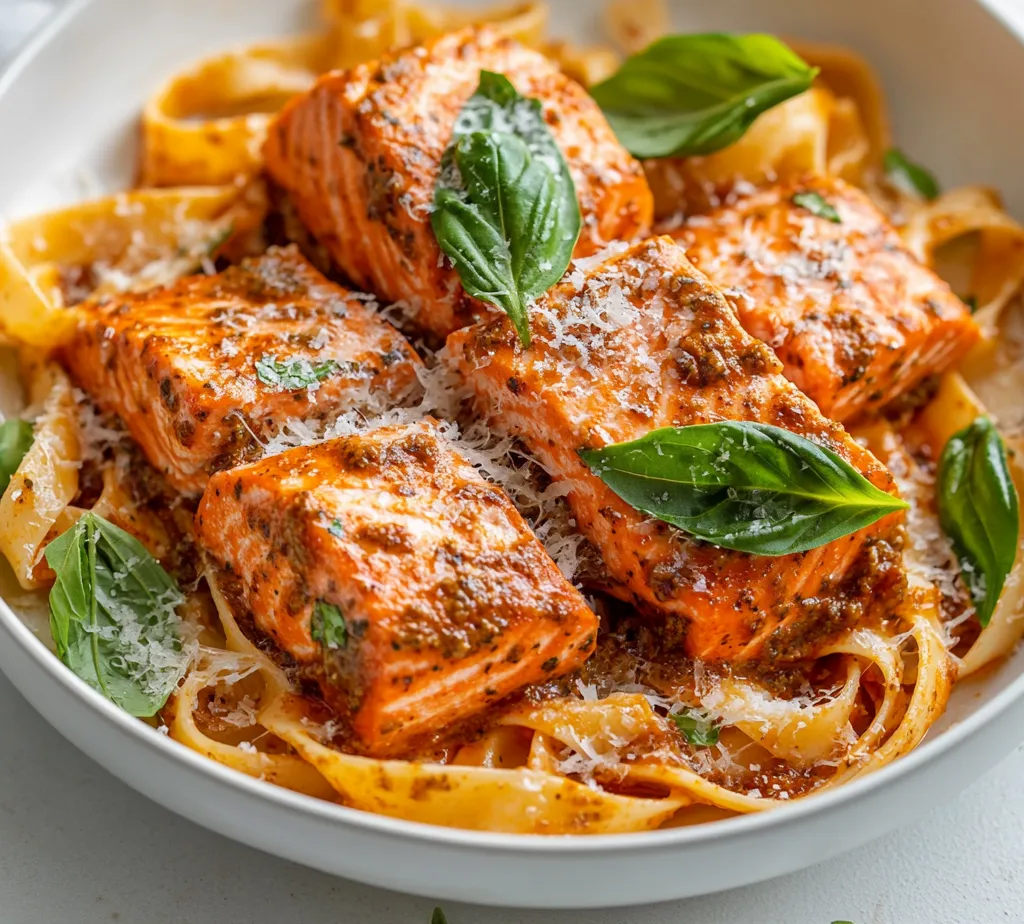
For an elegant touch, serve the dish in shallow bowls, allowing the pasta and sauce to create a beautiful base. Arrange the salmon fillet artfully on top, and scatter fresh basil leaves and a sprinkle of Parmesan around for color and flavor contrast. This not only enhances the visual appeal but also provides an impressive dining experience for your guests.
Overview of the Key Ingredients
The star of the dish, the salmon fillets, should ideally be fresh, firm, and bright in color. The quality of the salmon greatly influences the final taste of the dish. When prepared properly, salmon lends a buttery richness that complements the creamy sauce. Additionally, heavy cream plays a crucial role in creating a luscious, velvety texture that envelops the salmon and pasta, making every bite indulgent.
Red pesto, which can be store-bought or homemade, is a vibrant condiment that typically consists of sun-dried tomatoes, nuts, olive oil, and herbs. Its enriched flavor significantly boosts the overall profile of this dish, infusing it with both depth and character. The use of extra virgin olive oil adds healthy fat and enhances the flavor during the cooking process, while garlic contributes an aromatic base that is essential for the sauce. Fresh lemon zest and juice are indispensable in this recipe, providing a bright contrast to the richness of the cream and salmon.
Choosing the right pasta also enhances the dining experience. Options like fettuccine or penne not only hold onto the creamy sauce well but also provide a satisfying texture. Completing the dish with garnishes like fresh basil adds a herby note and bright color, while optional grated Parmesan introduces a savory depth, rounding out this delectable meal beautifully.
Preparation Process
Before diving into the cooking process, it’s essential to gather all the ingredients and tools required for this recipe. This includes having a large skillet on standby to cook the salmon. The initial step in preparing this dish involves seasoning the salmon fillets with salt and black pepper. It’s crucial not to rush this step; rather, allow the salmon to rest for a few minutes after seasoning to let the flavors penetrate the fish.
By ensuring the salmon is properly seasoned, you elevate the dish significantly, enhancing its overall flavor profile. Properly resting the fish before cooking allows the seasoning to adhere better and can result in a more flavorful outcome. As you proceed to cook the salmon, ensure the skillet is adequately heated before adding the oil and subsequently the salmon. This technique helps achieve a perfect sear, retaining moisture within the fillets, which is vital for creating a tender and flaky piece of fish.
Importance of Seasoning the Salmon
The seasoning of the salmon fillets at the beginning cannot be overlooked. Generous amounts of salt and freshly cracked black pepper are essential in this stage. The salt is not merely for flavor; it helps in drawing out moisture from the fish, aiding in a beautifully cooked piece of salmon. The black pepper adds a subtle heat that balances the richness of the cream and pesto sauce later on. To properly season your salmon, it’s advisable to salt it at least 15 minutes before cooking. This allows the fish to soak in the flavors, leading to a more enhanced culinary experience.
The pleasure of preparing this dish lies in its simplicity, yet the flavors that develop throughout each step make it an unforgettable meal, suitable for both everyday dining and special occasions alike. Next in Part 2, we delve into the actual cooking techniques followed by creating the creamy sauce, ensuring that you have all the necessary details to perfect your dish of salmon in creamy red pesto sauce.
Flavor layering with lemon zest and juice
The addition of lemon zest and lemon juice in this recipe does more than just add acidity; it creates a delightful contrast that enhances the dish’s overall flavor profile. Lemon zest contributes a bright, aromatic quality that’s released when the zest is freshly grated, adding depth to the creaminess of the sauce. The juice introduces a touch of tartness, balancing the richness of the heavy cream and pesto. This pairing allows the flavors to harmonize, making each bite refreshing and lively. When incorporating these ingredients, it’s essential to use fresh lemons, as the zest and juice from fresh fruit deliver a more vibrant taste than bottled alternatives.
Combining Salmon and Sauce
Carefully returning salmon to the skillet: Techniques to prevent breaking
When it comes time to combine the cooked salmon with the creamy red pesto sauce, careful handling is key to maintaining the integrity of the fillets. To prevent the salmon from breaking apart, use a spatula to gently lift it from the plate. When placing it back into the sauce, aim to slide the spatula underneath the fillet rather than dropping it in from above. This technique minimizes the risk of the salmon fillets breaking apart. Additionally, using a non-stick skillet can make this process smoother, as the salmon is less likely to stick and flake.
How to ensure even coating with the sauce
Once the salmon is nestled into the sauce, you want to ensure an even coating for maximum flavor. Use a spoon to gently scoop the sauce from the skillet and drizzle it over the top of the salmon. This method ensures that the sauce clings to every inch of the fillet, allowing the flavors to permeate beautifully. Allow the fish to sit in the sauce for a minute or two; this not only helps with the disbursement of flavors but also lets the salmon absorb some of the richness of the sauce without overcooking.
Timing for heating through without overcooking
Reheating the salmon within the sauce should be done carefully. After resting the salmon in the sauce for an additional two minutes, check for doneness. Salmon continues to cook slightly even after being removed from heat, characterized by its pinkness in the center. The goal is to achieve a perfect flake without compromising tenderness. Monitor the temperature closely; the ideal internal temperature for salmon is 145°F (63°C).
Serving Suggestions
Recommended pasta types: Fettuccine, penne, and more
This delectable salmon in creamy red pesto sauce can be served over various pasta types. Fettuccine and penne are highly recommended due to their shapes, which hold the creamy sauce well. Fettuccine’s broad, flat surface enhances the textural experience, while penne’s ability to capture sauce in its tubular shape ensures each bite is flavorful. Other suitable options include farfalle, which adds a touch of elegance, or even gnocchi for a comforting twist.
Plating tips for a restaurant-style presentation
For an impressive presentation, focus on layering the pasta and salmon artfully in the dish. Start by placing a generous serving of pasta in the center of the plate, creating a nest-like shape. Next, gently position the salmon fillet on top. This method not only elevates the visual appeal but also guides diners in the eating process. Finish by drizzling additional sauce around the pasta for both flavor and decor, and consider using a small amount of reserved pasta water to adjust the sauce consistency to your preference.
Garnishing with fresh basil: Techniques for maximum visual appeal
Fresh basil adds both flavor and visual appeal to the dish. To maximize its presentation, opt for whole leaves or a chiffonade (thinly sliced strips) of basil. Placing a few intact leaves on top adds freshness, while scattering chiffonade around the plate can create a beautiful, artistic flair. Ensuring the basil is washed and dried properly before garnishing will maintain the vibrant color and avoid wilting. For an extra flourish, a light drizzle of high-quality olive oil can enhance the overall appearance.
Incorporating grated Parmesan for added flavor
Grated Parmesan cheese introduces a salty, nutty flavor that enhances the dish’s richness. When serving, consider using a microplane or box grater for a fine, snow-like texture that distributes easily on the salmon and pasta. Allow each person to add cheese according to their preference, but for a refined touch, offer a freshly grated topping right before serving to maintain its aromatic quality.
Variations and Customizations
Using different types of salmon: Fresh vs. frozen
Fresh salmon is often preferred for its superior flavor and texture, but frozen salmon can be a viable alternative, especially when fresh options are not available. Proper thawing is crucial—always thaw overnight in the refrigerator to prevent moisture loss and ensure even cooking. Remember to check for higher fat content in the salmon type you select, as it can influence the dish’s richness.
Exploring homemade vs. store-bought red pesto
While store-bought red pesto is a convenient option, making your own can elevate the overall taste. Homemade red pesto allows for adjustments to ingredients, such as using fresh herbs or opting for different nuts, which can provide a unique twist on this classic sauce. If you’re looking for intensity, consider roasting the tomatoes and garlic before blending, which adds depth to the sauce.
Possible substitutions for heavy cream
If you’re seeking a lighter option or have dietary constraints, consider using half-and-half, which still provides creaminess with lower fat content. For a non-dairy alternative, coconut cream or cashew cream can mimic the texture of heavy cream well. However, each replacement may alter the final flavor profile slightly, so it’s advisable to adjust seasoning accordingly.
Dietary Considerations
Gluten-free pasta options for a broader audience
For those following a gluten-free diet, numerous pasta alternatives are available, including those made from rice, quinoa, or chickpeas. These options provide a fulfilling and satisfying base while maintaining the dish’s integrity. Ensure you check labels for cross-contamination and cooking instructions, as gluten-free pasta can have varying boiling times.
Dairy-free alternatives for the creamy sauce
To accommodate dairy-free diets, substitute the heavy cream with plant-based alternatives, such as almond milk, cashew cream, or a soy-based whipping cream. Be mindful that these alternatives may impart their own flavors, so carefully consider how they complement the red pesto before incorporating them into the dish.
Managing sodium levels in a flavorful dish
To manage sodium levels, particularly for those watching their salt intake, consider making your own pesto, controlling the salt content, or using low-sodium alternatives for store-bought versions. Additionally, flavor can be enhanced with herbs and spices, allowing salt levels to be adjusted down without sacrificing taste.
Meal Pairings
Ideal side dishes that complement the creamy salmon
To accompany salmon in creamy red pesto sauce, consider serving light side dishes such as a mixed greens salad with a light vinaigrette, grilled vegetables, or roasted asparagus. These options balance the richness of the main dish without overwhelming the palate and can add a refreshing contrast.
Recommended wine and beverage pairings
A crisp white wine, such as a Sauvignon Blanc or Pinot Grigio, complements the creamy sauce beautifully, bringing out the freshness of the lemon and basil. For those preferring non-alcoholic options, an herbal iced tea or sparkling water with a slice of lemon can cleanse the palate after enjoying the richness of the dish.
Suggestions for appetizers or salads to start the meal
To start off your meal, light appetizers like bruschetta with tomato and basil or a classic Caprese salad can perfectly set the stage for the salmon dish. These appetizers share similar flavor profiles, enhancing the dining experience while keeping the theme cohesive.
Cooking Tips for Success
Essential kitchen tools for making the dish
Utilizing the right kitchen tools can greatly affect the cooking process. A large non-stick skillet is ideal for cooking the salmon, preventing sticking and breakage. A good-quality spatula is essential for careful handling of the fish. Additionally, a microplane or grater is invaluable for zesting lemons and grating cheese efficiently. Having measuring cups and spoons on hand ensures accuracy in the sauce preparation.
Common pitfalls to avoid when cooking salmon
Overcooking is the most common pitfall when preparing salmon. Always keep an eye on the cooking time, rotating the fillets gently to help them cook evenly. Using a food thermometer can help ensure perfect doneness. Moreover, avoid flipping the salmon too frequently; letting it cook uninterrupted helps achieve a beautifully seared exterior while keeping the fish moist.
Storing leftovers and reheating tips for optimal flavor
Store any leftovers tightly sealed in an airtight container in the refrigerator. To reheat, do so gently, low and slow, either in a skillet over low heat or in the microwave at reduced power. Be vigilant to prevent drying out the salmon. Adding a splash of cream or broth while reheating can help keep the dish moist.
Conclusion
The salmon in creamy red pesto sauce presents a perfect balance of rich and tangy flavors, complemented by tender salmon fillets and a luscious creamy sauce. With an approachable cooking time of just 25 minutes, this dish showcases a delightful meld of textures and tastes, making it a satisfying choice for any meal occasion.
Salmon in Creamy Red Pesto Sauce
Ingredients
- 4 fillets salmon
- 1 cup heavy cream
- ½ cup red pesto
- 2 tablespoons extra virgin olive oil
- 2 cloves garlic
- 1 teaspoon fresh lemon zest
- 1 tablespoon freshly squeezed lemon juice
- Salt
- freshly ground black pepper
- Fresh basil leaves
- Cooked pasta
- Grated Parmesan cheese
Instructions
- Season the salmon fillets with salt and pepper on both sides.
- Heat olive oil in a skillet over medium heat and cook salmon skin-side down for 4-5 minutes on each side.
- Remove salmon and set aside.
- In the same skillet, sauté minced garlic for 30 seconds until fragrant.
- Add heavy cream, red pesto, lemon zest, and lemon juice; stir and simmer for 3-4 minutes.
- Return salmon to the skillet, spoon sauce over it, and cook for an additional 2 minutes.
- Serve salmon over cooked pasta with extra sauce and garnish with basil and Parmesan.