
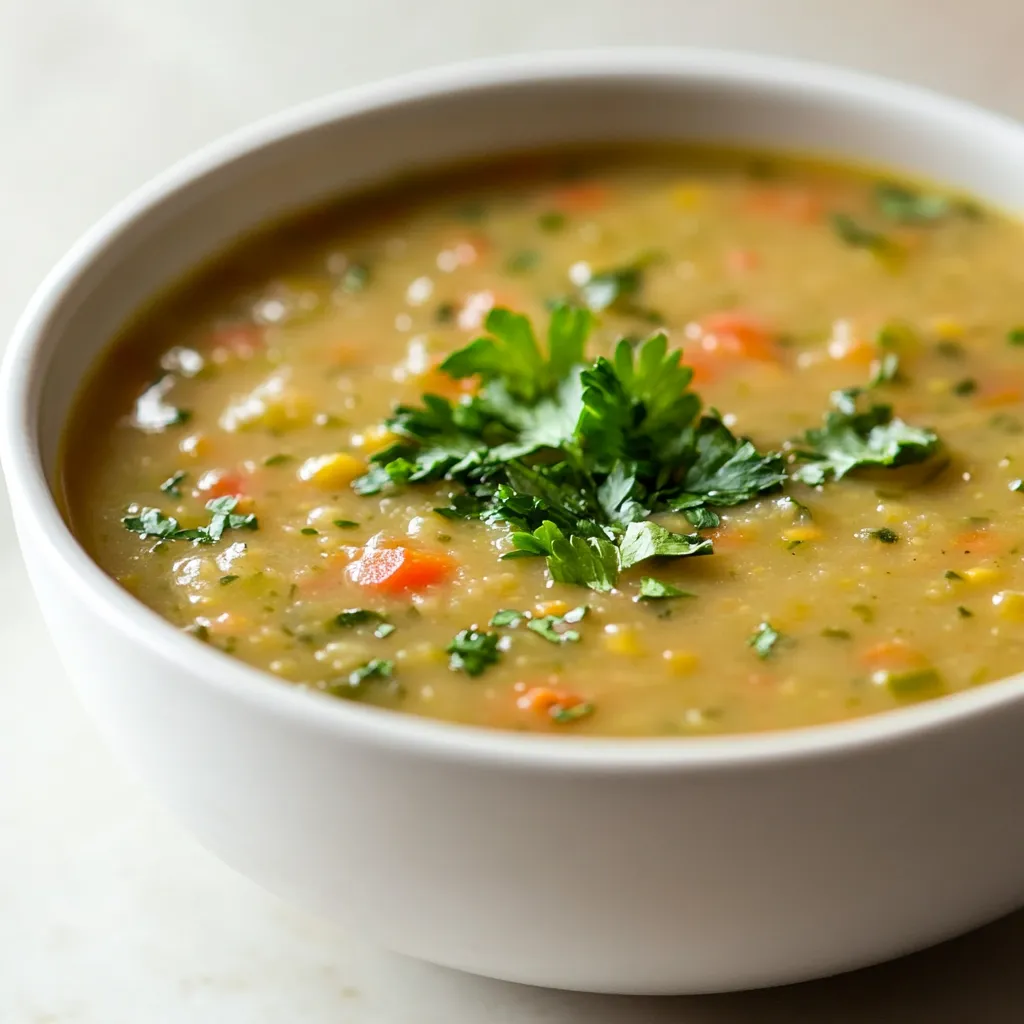
Hearty Split Pea Soup Delight
Introduction
Exploring the comforting warmth of a bowl of split pea soup, this article delves into making a hearty split pea soup delight that captivates the senses. Whether you’re looking for a nourishing meal on a chilly day or a wholesome dish packed with nutrients, this recipe offers a perfect balance of flavors and textures. Packed with green split peas, fresh vegetables, and fragrant seasonings, this soup is not only delicious but also brings an element of tradition to your dining table.
Split pea soup has been a beloved staple for generations, known for its rich and creamy texture, which comes from the split peas themselves as they cook down. This dish marries the earthiness of peas with the subtle sweetness of carrots and the aromatic quality of garlic and onion, making it a true delight for the palate. Ideal for serving at family gatherings or on a quiet evening at home, this recipe provides a cozy hug in a bowl that’s sure to please both vegetarians and meat-lovers alike.
Recipe Overview
– Total Time: Approximately 1 hour
– Yield/Servings: Not specified in the recipe
– Difficulty: Not specified in the recipe
Ingredients
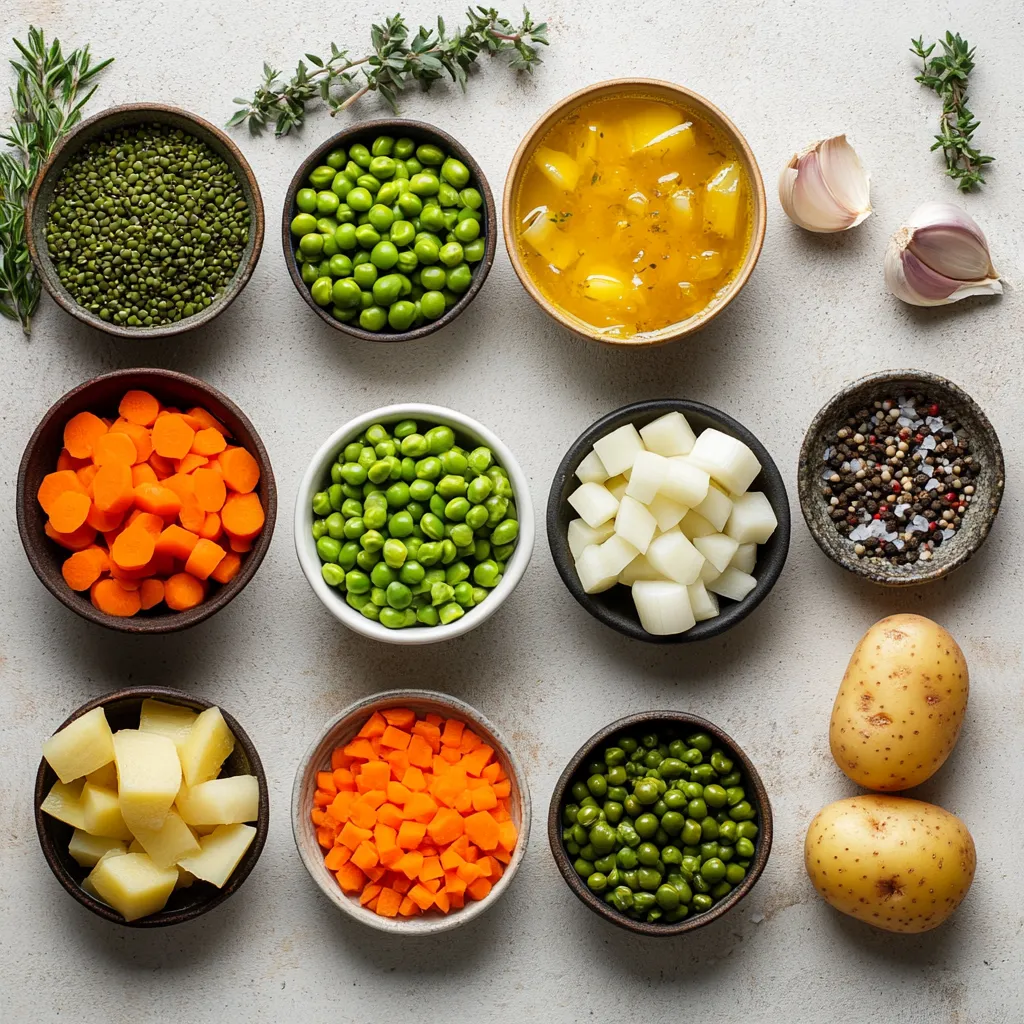
– 1 cup green split peas, thoroughly rinsed
– 1 medium onion, finely diced
– 2 cloves garlic, minced
– 2 medium carrots, peeled and diced
– 2 celery stalks, diced
– 1 medium potato, peeled and diced
– 1 bay leaf
– 1 teaspoon dried thyme
– 1 teaspoon smoked paprika
– 6 cups vegetable broth (or chicken broth for a non-vegetarian option)
– Salt and freshly ground black pepper, to taste
– 2 tablespoons extra virgin olive oil
– Fresh parsley, finely chopped (for garnish)
Instructions
1. Begin by heating the extra virgin olive oil in a large pot over medium heat. Once hot, add the finely diced onion and sauté for about 5 minutes, or until the onion turns translucent and fragrant.
2. Next, stir in the minced garlic along with the diced carrots and celery. Continue cooking for an additional 5-7 minutes, allowing the vegetables to soften and meld together.
3. Add the rinsed split peas, diced potato, bay leaf, dried thyme, smoked paprika, and vegetable broth to the pot. Stir thoroughly to ensure all ingredients are well combined.
4. Increase the heat to bring the mixture to a boil, then reduce it to low heat. Cover the pot with a lid and allow it to simmer gently for approximately 45 minutes, or until the split peas are tender and creamy.
5. After the split peas are fully cooked, carefully remove the bay leaf. For a smoother texture, use an immersion blender to puree the soup to your liking; alternatively, you can blend it in batches using a countertop blender.
6. Taste the soup and season it with salt and freshly ground black pepper as desired. If you prefer a thinner soup, simply add more broth or water until the desired consistency is reached.
7. Serve the soup hot, garnished with a sprinkle of freshly chopped parsley for an added burst of flavor and color. Enjoy your delicious and hearty split pea soup!
Optional Presentation Tips:
Serve the soup in rustic bowls, drizzling a little olive oil on top and adding a sprig of parsley for a vibrant finish. Pair with crusty bread for a complete meal experience.
Cooking Equipment
To successfully execute the hearty split pea soup delight, having the right cooking equipment is crucial. The following sections detail the necessary tools that will help streamline the cooking process, ensuring that every ingredient is properly handled and the soup is prepared without hassle.
Cooking Pot
A large pot is essential for making split pea soup, as it provides ample space for all the ingredients to simmer together. A pot with a capacity of at least 6 quarts is recommended to accommodate the ingredients without boiling over. Ideally, opt for a heavy-bottomed pot that distributes heat evenly, ensuring that nothing sticks to the bottom and potentially burns. It is also beneficial to have a lid that fits well to maintain moisture during the simmering process.
Utensils
Knives for chopping are essential, particularly a sharp chef’s knife for dicing the onion, garlic, carrots, celery, and potato. Additionally, having measuring cups and spoons on hand will allow for precision when adding the split peas and broth. A sturdy cutting board will provide a stable surface for chopping the vegetables. While optional, using a wooden spoon or spatula for stirring can help prevent scratches on the pot’s surface and effectively combine the ingredients.
Blending Tools
To achieve a smooth texture in your soup, an immersion blender is the ideal tool, as it allows for easy blending right in the pot without the need to transfer hot soup to a countertop blender. However, if an immersion blender is not available, a countertop blender can still do the trick. When using a countertop blender, be sure to blend in small batches and let the steam escape to avoid pressure build-up, which can lead to messy spills.
Preparation Steps
Preparation is key to making the best hearty split pea soup. The following categories break down the crucial steps of the process, ensuring that each ingredient is prepared correctly for maximum flavor and texture.
Sautéing Vegetables
Start the soup by heating olive oil in a large pot. Once the oil is hot, finely dice the onion and add it to the pot. Sauté the onion for about 5 minutes; watch as it becomes translucent and fragrant, serving as the aromatic base for the soup. After the onion is cooked through, the next step is to include the minced garlic and diced carrots and celery. These vegetables should be stirred together and cooked for an additional 5-7 minutes. This step allows the flavors to meld, softening the vegetables and enhancing their natural sweetness.
Combining Ingredients
Once the sautéing process is complete, it’s time to elevate the dish with the remaining ingredients. Into the pot, add the thoroughly rinsed split peas, diced potato, bay leaf, dried thyme, and smoked paprika. The combination of these ingredients gives the soup its hearty essence and depth of flavor. Pour in the vegetable broth, ensuring all components are submerged and can cook together harmoniously. Stir thoroughly to combine, allowing each ingredient to interact and infuse its essence into the broth.
Cooking Process
After combining the ingredients, increase the heat to bring the mixture to a boil. Once it reaches a rolling boil, reduce the heat to low and cover with a lid, letting it simmer gently for about 45 minutes. Monitoring the cooking time is essential, as the split peas need ample time to tenderize and dissolve into the broth, creating a creamy texture. Stir occasionally throughout the cooking phase to prevent anything from sticking to the bottom and to ensure even cooking.
Blending Techniques
Achieving the desired texture for the soup is essential for the ultimate experience. Once the split peas are tender and cooked down, the next step involves blending. The use of an immersion blender allows you to control the consistency directly in the pot. For those opting for a countertop blender, carefully transfer the hot mixture in batches, ensuring the lid is not sealed so steam can escape. The blending should be done until the soup reaches your preferred level of smoothness.
By seamlessly blending these techniques, you’ll not only create a delightful soup but also embody the comforting nature that split pea soup is renowned for, enhancing every palate it touches.
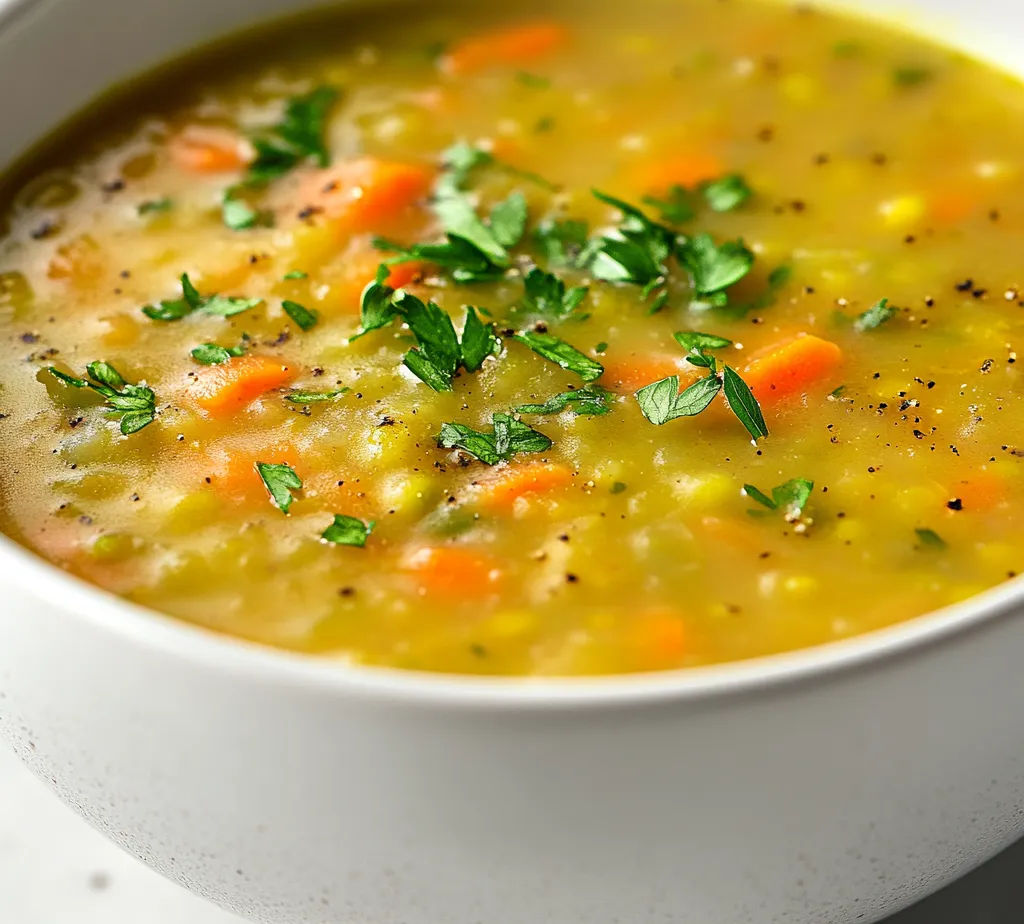
Advice on how to achieve the desired texture for the soup, ranging from chunky to smooth
Achieving the perfect texture for your Hearty Split Pea Soup is essential for personal enjoyment and can be tailored to suit various preferences. You can choose between a creamy, smooth consistency or a chunkier version by adjusting how you process the ingredients after cooking.
Using an Immersion Blender
Using an immersion blender directly in the pot is an efficient way to transform your soup’s texture. This method allows you to maintain the heat of the soup while blending, making it a convenient option. Simply submerge the blender into the soup, keeping it at an angle, and pulse until you reach your desired creaminess. The immersion blender is also easier to clean compared to a countertop blender, as there is no need to transfer hot liquid, which minimizes the risk of spills or burns. It’s important to pulse gently to avoid splashing hot soup.
Using a Countertop Blender
If you prefer using a countertop blender to achieve a smoother texture, it’s crucial to store safety. First, let the soup cool slightly to avoid excessive steam buildup. Fill the blender no more than halfway, and allow steam to escape by leaving the lid slightly ajar. Blend in batches if necessary, and pulse until you achieve a velvety finish. Always start with lower speeds to ensure the ingredients blend evenly, and gradually increase the speed for a smoother texture. Remember to carefully transfer the blended soup back to the pot once finished.
Adjusting Consistency
Many find personal preference dictating the consistency of their split pea soup; thus, it can easily be adjusted accordingly. The following tips can help you achieve your ideal texture.
Thickening the Soup
To create a thicker soup, consider incorporating additional split peas. You can either cook a small separate batch and blend them before mixing them back into your main pot or add dried split peas during the initial cooking phase. Allowing the soup to simmer longer will also help it reduce and thicken naturally. Other methods to avoid excess thinning include ensuring you use less vegetable broth or reducing the amount of water added during final adjustments.
Thinning the Soup
If you find your soup is thicker than desired, simply add more vegetable broth or water. For the finest consistency, warm the broth before adding it to the pot to maintain the temperature. This not only prevents the soup from cooling unexpectedly but also ensures that the flavors remain balanced. Achieving a luxurious, silky finish can also be done by blending thoroughly and tweaking with small amounts of broth until you reach your preferred consistency.
Flavor Enhancements
Enhancing the flavor profiles of your soup not only elevates its taste but also adds complexity. There are various ways to experiment with these enhancements.
Herbal Variations
Incorporating different fresh herbs can significantly change the soup’s aroma and flavor. Fresh basil, dill, or rosemary can be wonderful alternatives to thyme and can be added towards the end of cooking to retain their vibrant flavor. A sprinkle of fresh cilantro provides a contrasting taste that pairs remarkably well with the earthiness of the peas.
Spicy Twists
For those who enjoy a bit of heat, adding chili flakes, ground cumin, or smoked chipotle powder can introduce warmth to the soup without overwhelming the original flavors. Start with a small pinch of spice, then gradually increase to reach your desired spice level. Remember to mix thoroughly before tasting more to ensure the heat is balanced throughout the soup.
Presentation Tips
Beyond flavor, the presentation can elevate the dining experience of your Hearty Split Pea Soup.
Bowl Selection
Choosing the right bowl significantly impacts the presentation. Rustic, unevenly shaped bowls offer a hearty and cozy feel, while sleek, modern bowls add elegance. For visual appeal, consider selecting bowls with a contrasting color to brighten the soup and allow the green hues of the peas and vegetables to pop.
Garnishing Techniques
Simple garnishing techniques can change how the dish is perceived. Drizzling a small amount of extra virgin olive oil adds depth and richness to the soup, while fresh parsley brings a burst of color and freshness. Placing a light sprinkle of crushed pepper on top provides an inviting look that hints at the flavors within.
Complementary Sides
Serving your split pea soup with complementary sides enhances the overall meal. Crusty bread, like a sourdough or rustic baguette, provides texture and a satisfying component to soak up the soup. A simple side salad or sautéed greens can also complement the dish beautifully, adding freshness and crunch to your meal.
Nutritional Benefits
The ingredients in your Hearty Split Pea Soup contribute numerous health advantages, making it a wholesome and nourishing option.
Protein Content
Split peas are an excellent source of plant-based protein, offering vital nutrients for muscle repair and satiety. This makes the soup a well-rounded dish, especially for those following a vegetarian or vegan diet.
Fiber and Satiety
The high fiber content of split peas aids in digestion and contributes to a feeling of fullness. Fiber helps regulate blood sugar levels and promotes digestive health, making this soup not only delicious but also beneficial for your overall health.
Vitamins and Minerals
The vegetables included, such as carrots, potatoes, and celery, are packed with vitamins A and C, potassium, and other essential nutrients. These ingredients add not only flavor but also a nutritional boost to the soup, making each bowl a healthy choice.
Storage Tips
Properly storing your split pea soup is crucial to maximize freshness and flavor retention after cooking.
Refrigeration
For short-term storage, place the soup in an airtight container in the refrigerator. It can be kept for up to 4-5 days. Allowing the soup to cool to room temperature before sealing helps prevent condensation build-up, which can dilute the flavors.
Freezing
For long-term storage, the soup freezes exceptionally well. Ladle it into freezer-safe containers, leaving some space at the top for expansion. It is best to consume it within 3-4 months for optimal flavor and texture. When ready to eat, thaw in the refrigerator overnight before reheating.
Conclusion
This hearty split pea soup delivers a delightful combination of flavors and textures, creating a creamy and satisfying dish. Its chickpea protein base, fresh vegetable components, and spice enhancements come together seamlessly. Overall, the preparation takes an hour, making it a perfect weekday meal that’s both nutritious and fulfilling.
Hearty Split Pea Soup Delight
Ingredients
- 1 cup green split peas
- 1 medium onion
- 2 cloves garlic
- 2 medium carrots
- 2 stalks celery
- 1 medium potato
- 1 leaf bay leaf
- 1 teaspoon dried thyme
- 1 teaspoon smoked paprika
- 6 cups vegetable broth
- to taste salt
- to taste black pepper
- 2 tablespoons extra virgin olive oil
- to garnish fresh parsley
Instructions
- Heat olive oil in a large pot over medium heat.
- Add diced onion and sauté for about 5 minutes until translucent.
- Stir in minced garlic, diced carrots, and celery; cook for 5-7 minutes.
- Add rinsed split peas, diced potato, bay leaf, thyme, paprika, and broth.
- Bring to a boil, then reduce heat and simmer for 45 minutes.
- Remove bay leaf and blend the soup for a smoother texture if desired.
- Season with salt and pepper to taste.
- Serve hot, garnished with chopped parsley.