
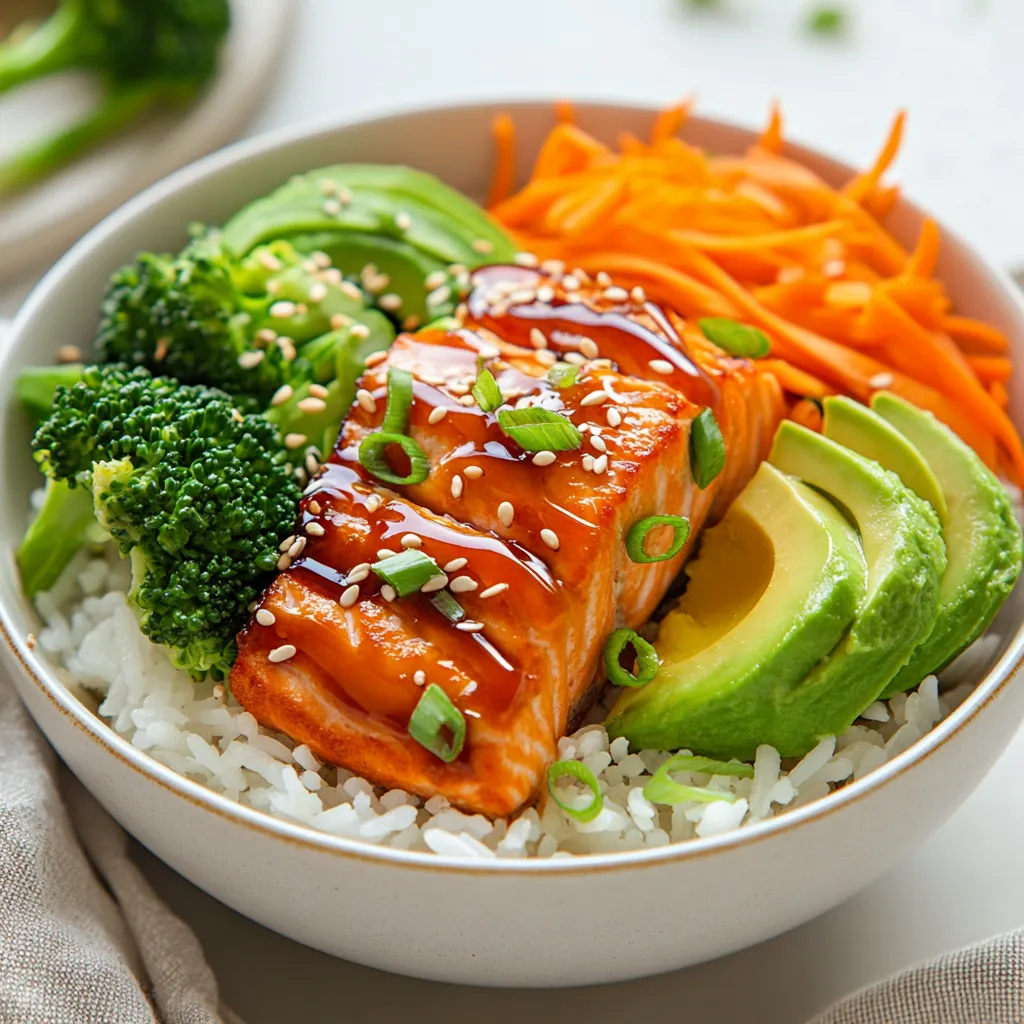
Sriracha Honey Glazed Salmon Bowls
Introduction
The Sriracha Honey Glazed Salmon Bowl is a delightful fusion dish that combines the rich flavors of salmon marinated in a spicy-sweet sauce with fresh vegetables and a hearty grain base. This recipe brings together wholesome ingredients to create a satisfying meal that’s both nutritious and easy to prepare. Perfect for weeknight dinners or meal prepping, these bowls are not only delicious but also visually appealing, making them a favorite for any occasion. Whether you’re looking to impress guests or simply seeking a convenient and healthy dinner option, these bowls encapsulate vibrant flavors and textures that will leave you craving more.
With the savory undertones of the marinated salmon paired with colorful, fresh toppings, each bite is a culinary journey that stimulates the taste buds. This dish is versatile enough to cater to diverse dietary preferences, complementing a variety of grains and vegetables. As you savor the spicy and sweet notes of Sriracha and honey, you’re also treating yourself to essential nutrients from the salmon and vegetables, establishing this bowl as not only a treat but also a wholesome meal.
Recipe Overview
– Total Time: 45 minutes
– Yield/Servings: 4
– Difficulty: Not specified in the recipe
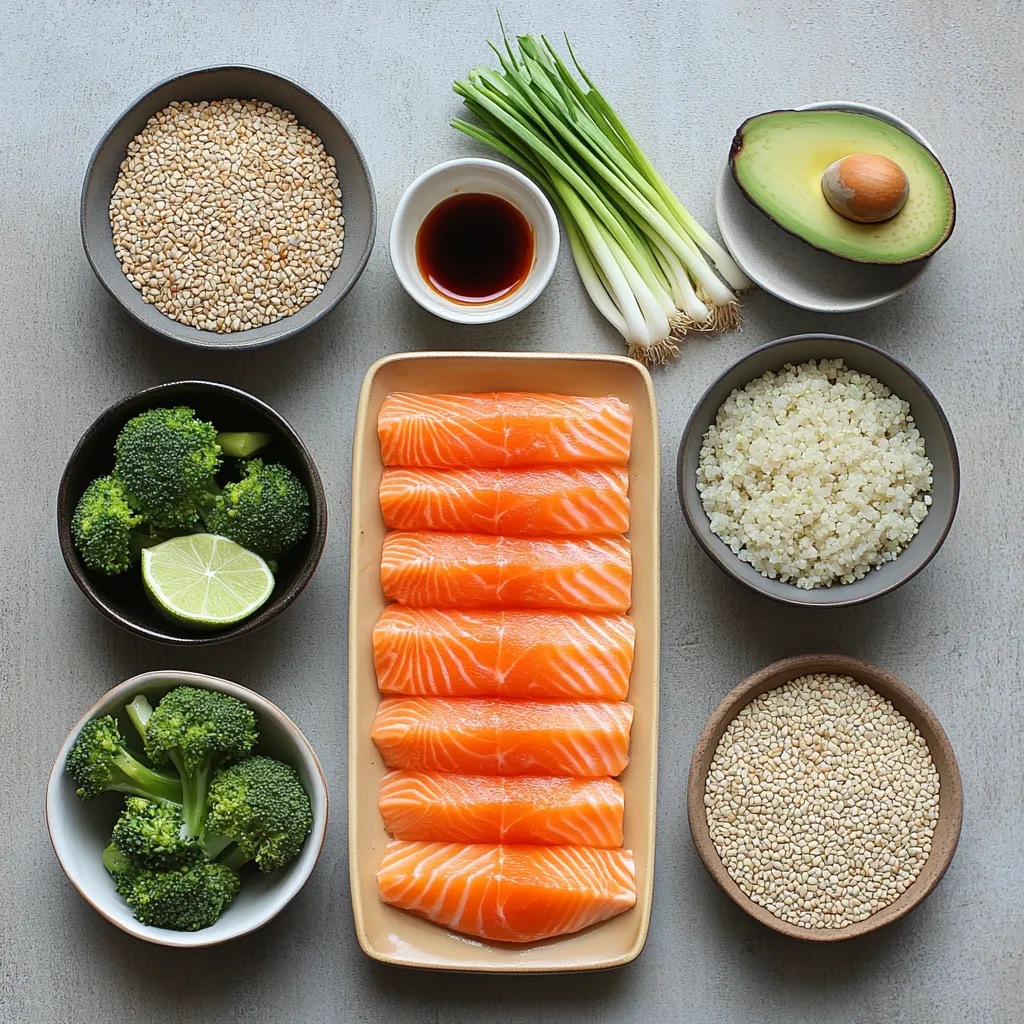
Ingredients
– 2 salmon fillets (6 oz each)
– 2 tablespoons Sriracha sauce
– 2 tablespoons honey
– 1 tablespoon soy sauce
– 1 tablespoon olive oil
– 1 teaspoon garlic powder
– 1 teaspoon ground ginger
– Salt and black pepper to taste
– 2 cups cooked jasmine rice or quinoa
– 1 cup steamed broccoli florets
– 1 cup shredded carrots
– 1 ripe avocado, sliced
– 2 green onions, finely chopped
– Sesame seeds for garnish
– Lime wedges for serving
Instructions
1. Marinate the Salmon: In a mixing bowl, combine the Sriracha sauce, honey, soy sauce, olive oil, garlic powder, ground ginger, salt, and black pepper. Whisk until well blended. Place the salmon fillets in a shallow dish and pour the marinade over them, ensuring they are well coated. Cover the dish and let the salmon marinate in the refrigerator for 15 to 30 minutes to absorb the flavors.
2. Cook the Salmon: Preheat your oven to 400°F (200°C). Line a baking sheet with parchment paper for easy cleanup. Arrange the marinated salmon fillets on the prepared baking sheet, ensuring they are skin-side down. Bake in the preheated oven for 12 to 15 minutes, or until the salmon is cooked through and flakes easily with a fork.
3. Prepare the Bowls: While the salmon is baking, start assembling the base for your bowls. Divide the cooked jasmine rice or quinoa evenly among four serving bowls. Top each bowl with a generous portion of steamed broccoli, shredded carrots, and fresh avocado slices.
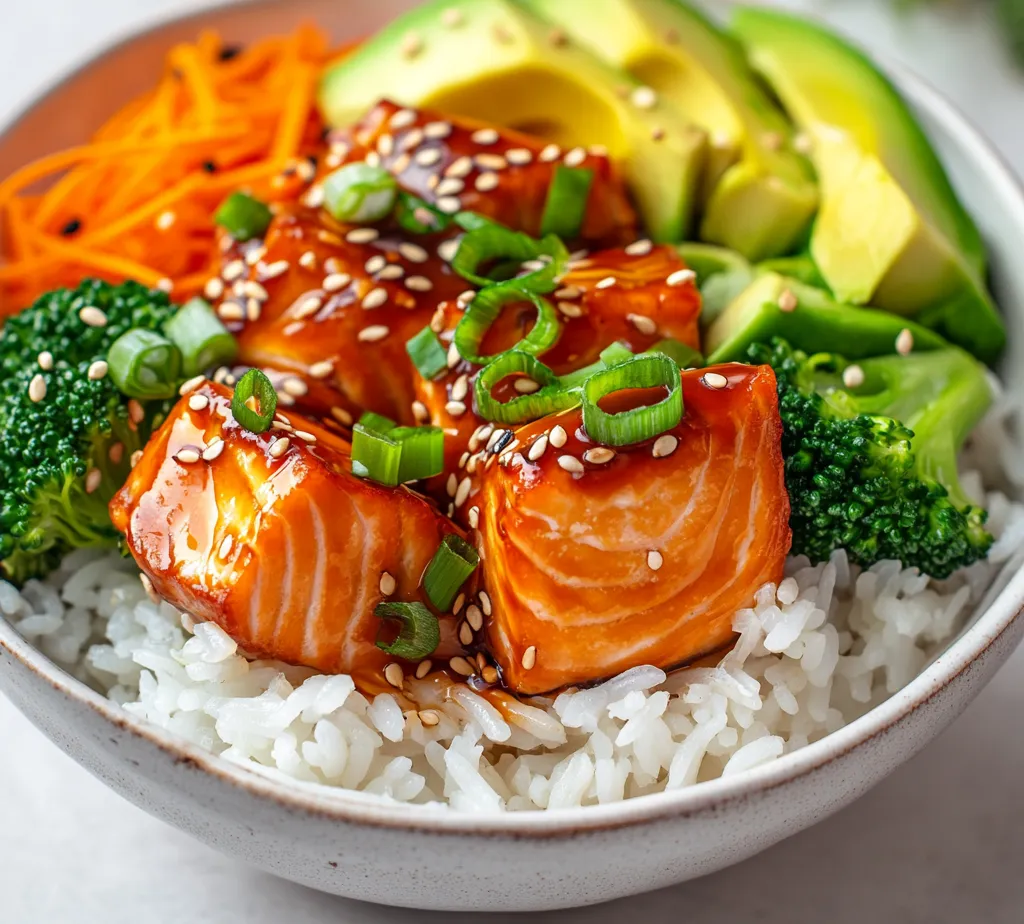
4. Assemble the Bowls: Once the salmon is done baking, carefully remove it from the oven and allow it to rest for a few minutes. Using a fork, flake the salmon into bite-sized pieces and evenly distribute it over the prepared bowls.
5. Garnish and Serve: Finish each bowl by sprinkling chopped green onions and sesame seeds on top for added flavor and texture. Serve with lime wedges on the side for a refreshing squeeze of citrus.
Marinating the Salmon
Importance of Marination
Marinating the salmon is an essential step that elevates the dish by allowing the flavors to develop and penetrate the fish. The combination of Sriracha, honey, soy sauce, olive oil, garlic powder, and ground ginger not only infuses the salmon with a complex flavor profile but also helps in tenderizing the fish, making it moist and succulent after cooking. When the salmon is marinated for the right amount of time, it absorbs the heat from the Sriracha and the sweetness from the honey, creating a harmonious balance of taste that is both bold and inviting.
Step-by-Step Marination Process
To begin the marination process, gather all the ingredients required for the marinade. In a mixing bowl, combine 2 tablespoons of Sriracha sauce, 2 tablespoons of honey, 1 tablespoon of soy sauce, 1 tablespoon of olive oil, 1 teaspoon of garlic powder, and 1 teaspoon of ground ginger. Season this blend with salt and black pepper to taste, then whisk thoroughly until all components are fully integrated, resulting in a smooth marinade. Once the mixture is ready, place your salmon fillets in a shallow dish and pour the prepared marinade over the top. Ensure that each fillet is adequately coated by turning them gently in the marinade. Cover the dish with plastic wrap or a lid and allow it to rest in the refrigerator for a period of 15 to 30 minutes.
Ideal Marination Time
The recommended marination time for the salmon is between 15 and 30 minutes. This duration is important because it allows the fish to absorb the flavors without overwhelming its natural taste. A shorter marination period may not lead to the same depth of flavor, while longer marination times can sometimes cause the fish to become mushy. Therefore, checking the clock and adhering to this timeframe maximizes flavor absorption and contributes to the perfectly balanced profile of this dish.
Cooking the Salmon
Preheating the Oven
One of the critical components of cooking the salmon effectively is preheating the oven to 400°F (200°C). Preheating ensures that the salmon begins cooking immediately when placed inside, which is vital for achieving the desired texture. An adequately heated oven facilitates even cooking and helps maintain the salmon’s moisture, preventing it from drying out. This temperature is ideal for baking fish, allowing it to cook through thoroughly while resulting in a crispy exterior.
Baking Process
After marinating the salmon, prepare for baking by lining a baking sheet with parchment paper. This step not only aids in easy cleanup but also prevents the salmon from sticking to the pan. Arrange the marinated salmon fillets on the parchment-lined sheet, making sure they are skin-side down to retain moisture and skin texture during the cooking process. Place the baking sheet in the preheated oven and bake the salmon for approximately 12 to 15 minutes, monitoring for doneness throughout the cooking time.
Checking Doneness
To ensure that the salmon is cooked to perfection, look for the tell-tale signs of doneness. The salmon should have an opaque appearance and be slightly firm to the touch. Additionally, using a fork, you can check if it flakes easily, which indicates that it is fully cooked but still moist. These visual and tactile cues are essential, as they confirm the salmon isn’t overcooked, therefore retaining its delicate flavor and texture.
Preparing the Bowls
While the salmon is baking, you can efficiently use this time to prepare the bowls. Start by measuring out your base grain, which can be either cooked jasmine rice or quinoa, depending on your preference. Aim for 2 cups to be evenly divided among four serving bowls. The choice of grain adds a hearty foundation for the dish, complementing the rich flavors of the salmon.
After dividing the grain, you can begin layering the colorful and nutritious toppings. Incorporating steamed broccoli florets and shredded carrots not only introduces textures and flavors that balance the dish but also enhances its nutritional value. Each vegetable provides a crunch, presenting a delightful contrast to the tender salmon and grain. Adding fresh avocado slices introduces creaminess, enriching the overall experience. This method of assembling allows for a vibrant and appetizing presentation, setting the stage for a truly satisfying meal.
Base Selection
When deciding between jasmine rice and quinoa as the base for your Sriracha Honey Glazed Salmon Bowls, both options bring distinct flavors and nutrition to the table. Jasmine rice, with its fragrant aroma and slightly sticky texture, provides a beautiful complement to the sweetness of the honey glaze and the heat from the Sriracha. It is a great source of carbohydrates while remaining gluten-free. On the other hand, quinoa is a powerhouse grain, rich in protein and dietary fiber. Its nutty flavor and slightly crunchy texture make it an excellent substitute for those seeking a heartier base. Additionally, quinoa is gluten-free and a complete protein, meaning it contains all nine essential amino acids, making it a desirable option for plant-based diets. Both bases serve the purpose of absorbing the delicious flavors of the salmon and accompanying toppings.
Vegetable Preparation
Cooking the vegetables effectively is critical for maintaining both their visual appeal and nutritional content. Steaming broccoli is an excellent method, as it helps in preserving the vibrant green color and crunchiness while enhancing its nutritional value. Steaming should take about 5-7 minutes until the florets are bright green and tender yet crisp. This method keeps the vitamins intact, including vitamin C and K, which are abundant in broccoli.
For carrots, shredding is a quick and efficient way to prepare them. Using a box grater or a food processor ensures that the carrots remain colorful and crunchy, adding texture to your bowl. Shredded carrots offer a burst of sweetness and vibrant color, making the dish more visually appealing. Take care to shred them just before assembly to minimize nutrient loss.
Assembling the Bowl Components
Assembly of the bowls should be approached with a focus on balance and aesthetics. Start with an even distribution of your cooked jasmine rice or quinoa, placing approximately ½ cup in the base of each bowl. This will serve as a hearty foundation. Layer the steamed broccoli, shredded carrots, and avocado slices on top of the grains, creating a pleasing visual appeal as well as a variety of textures. Utilize a gentle hand while distributing the toppings to maintain the integrity of the salmon fillets that will later be added.
Flaking the Salmon
After baking, allow the salmon to rest for a few minutes. Resting is important as it allows the juices to redistribute throughout the fillet. To flake the salmon, use a fork and gently pull apart the fillet along the natural lines, which will break it into bite-sized chunks without shredding it too finely. This technique ensures that the salmon retains its moistness and also adds a rustic charm to your bowl when it is dispersed across the vegetables and grains.
Plating Techniques
Presentation can significantly elevate the dining experience. When plating the components, consider arranging them in sections rather than mixing everything together. For example, place the salmon flakes on one side, the steamed broccoli next to the shredded carrots, and add avocado slices atop the grains. This not only highlights each ingredient but also creates an artful display of colors. You can also sprinkle sesame seeds over the top of the salmon and vegetables to add a final touch of elegance.
Balancing Flavors and Textures
To achieve the best possible flavor balance, ensure that each bite of the bowl incorporates a bit of all components. The creamy avocado counteracts the spiciness from the Sriracha, while the fresh lime juice brightens up the sweetness from the honey. Encourage diners to mix the ingredients in their bowls before eating, which allows the diverse textures of crunchy vegetables, tender salmon, and fluffy rice or quinoa to mingle.
Choosing Garnishes
Garnishing the bowls with finely chopped green onions and sesame seeds serves two main purposes: enhancing flavor and boosting visual appeal. Green onions add a mild, oniony flavor that can brighten the overall taste of the dish, while sesame seeds provide a delightful crunch and a subtle nuttiness. Both these garnishes help in rounding out the taste experience, making the dish more delightful and visually stunning.
Adding Citrus Flavor
Lime wedges are an essential part of the serving process. The acidity of lime juice enhances the flavors of the salmon and the earthy vegetables while cutting through the richness of the avocado. A little squeeze just before eating can elevate the dish, providing a refreshing brightness. Encourage diners to tailor the amount of lime juice they add to suit their palate preferences.
Optional Presentation Tips
For an appealing presentation, consider using wooden or ceramic platters to serve the bowls. This can create a rustic feel that complements the dish’s overall theme. Drizzling additional Sriracha or honey over the salmon and vegetables can introduce an extra layer of flavor and aesthetic, providing a tantalizing look that entices the appetite.
Meal Prep Option
This dish is a fantastic candidate for meal prepping. You can prepare the salmon, vegetables, and grains in advance and store them in separate airtight containers for up to four days in the refrigerator. The bowls can be assembled quickly for lunch or dinner, allowing for nutritious meals throughout the week without the hassle of starting from scratch each time.
Pairing Recommendations
For a well-rounded meal, consider sides that complement the salmon bowls, such as a light cucumber salad or a refreshing fruit salad. Additionally, beverages such as iced green tea or infused sparkling water can provide cool refreshment alongside the spiciness of the Sriracha.
Making it Customizable
One of the best aspects of the Sriracha Honey Glazed Salmon Bowl is its customizable nature. Depending on your preferences, you can switch up the vegetables—such as using snap peas or bell peppers—or change the base by opting for brown rice, cauliflower rice, or even noodles. This adaptability makes it suitable for various dietary needs.
Overview of Main Ingredients
Salmon is packed with omega-3 fatty acids, which are essential for heart health and brain function. The combination of colorful vegetables not only makes the dish visually appealing but also enriches it with necessary micronutrients. Additionally, jasmine rice or quinoa serves as an excellent source of carbohydrates, providing energy for a busy day.
Caloric Breakdown
Each serving of Sriracha Honey Glazed Salmon Bowls is estimated to contain approximately 450-500 calories, depending on the specific amount of oil and honey used. For those wishing to reduce calorie intake, consider decreasing the amount of honey in the marinade or replacing some of the salmon with additional vegetables.
Leftover Storage
Storing leftovers correctly ensures you enjoy the dish for days. Place the assembled bowls in airtight containers, ensuring that the components are kept separate if possible to maintain freshness and prevent sogginess. The salmon and vegetables can stay fresh for up to four days in the refrigerator.
Reheating Instructions
When reheating, avoid the microwave if possible, as it can lead to a loss of texture. Instead, reheat the salmon and vegetables in a skillet over medium heat until warm. If necessary, add a splash of water to maintain moisture. For rice or quinoa, reheating in the microwave works well; cover to keep it moist.
Freezing Recommendations
Freezing components can be considered, but it’s best to freeze the salmon and grains separately. While cooked salmon can be kept in the freezer for up to three months, the fresh vegetables are best consumed fresh, as freezing can alter their texture.
The Sriracha Honey Glazed Salmon Bowls offer a delightful combination of flavors that balance spicy, sweet, and savory in every bite. With tender salmon, a medley of fresh vegetables, and a hearty base, this dish is both satisfying and nutritious. Preparing this meal takes about 45 minutes, allowing for a wholesome and uplifting dining experience any day of the week.
Sriracha Honey Glazed Salmon Bowls
Ingredients
- 2 fillets salmon
- 2 tablespoons Sriracha sauce
- 2 tablespoons honey
- 1 tablespoon soy sauce
- 1 tablespoon olive oil
- 1 teaspoon garlic powder
- 1 teaspoon ground ginger
- to taste salt
- to taste black pepper
- 2 cups cooked jasmine rice or quinoa
- 1 cup steamed broccoli florets
- 1 cup shredded carrots
- 1 ripe avocado sliced
- 2 green onions finely chopped
- sesame seeds for garnish
- lime wedges for serving
Instructions
- In a bowl, mix Sriracha, honey, soy sauce, olive oil, garlic powder, ginger, salt, and pepper.
- Marinate salmon fillets in the mixture for 15 to 30 minutes.
- Preheat oven to 400°F (200°C) and line a baking sheet with parchment paper.
- Place marinated salmon on the baking sheet, skin-side down, and bake for 12 to 15 minutes.
- Divide cooked rice or quinoa among four bowls.
- Top each bowl with steamed broccoli, shredded carrots, and avocado slices.
- Flake the baked salmon into bite-sized pieces and distribute over the bowls.
- Garnish with green onions and sesame seeds.
- Serve with lime wedges on the side.