
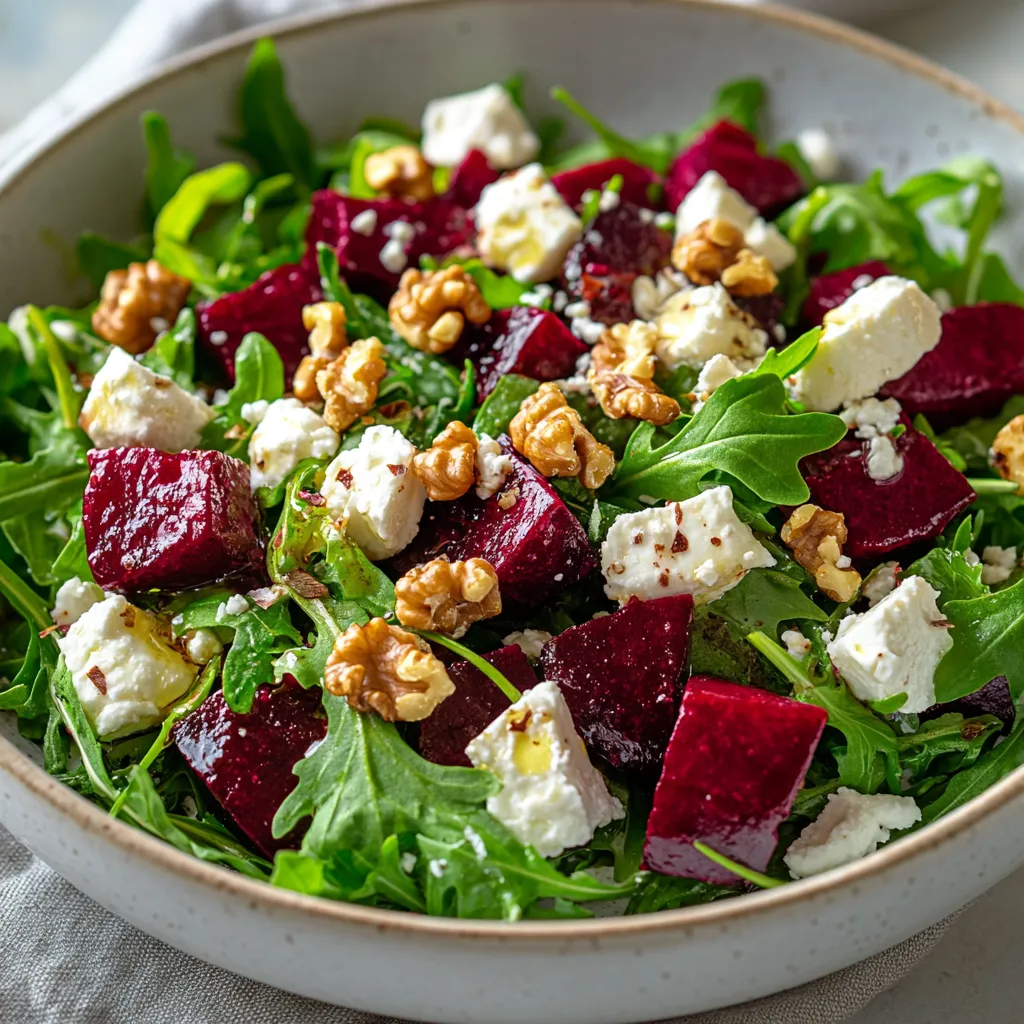
Vibrant Roasted Beet Salad with Arugula and Feta
Introduction
The vibrant roasted beet salad is not just a feast for the eyes; it’s a blend of earthy flavors and textures that celebrate the freshness of the ingredients. This dish combines sweet roasted beets with peppery arugula, creamy feta cheese, and crunchy walnuts, all beautifully dressed in a homemade balsamic vinaigrette. It’s a delightful way to kick off a meal or serve as a standout side dish.
This salad is not only visually stunning but is also a testament to the creative use of simple ingredients that pack a nutritional punch. Whether enjoyed at a cozy family dinner or served at a chic gathering, this salad enhances any dining experience. The interplay of flavors – the boldness of the beets, the zest of the arugula, and the rich creaminess of feta – makes every bite a joyful experience.
Whether you’re looking to impress guests or simply want a fresh and healthy dish to brighten your day, this roasted beet salad fits the bill perfectly. With minimal effort, it transforms basic ingredients into a culinary masterpiece.
Recipe Overview
– Total Time: 1 hour 15 minutes
– Prep Time: 15 minutes
– Servings: 4
– Difficulty: Not specified in the recipe
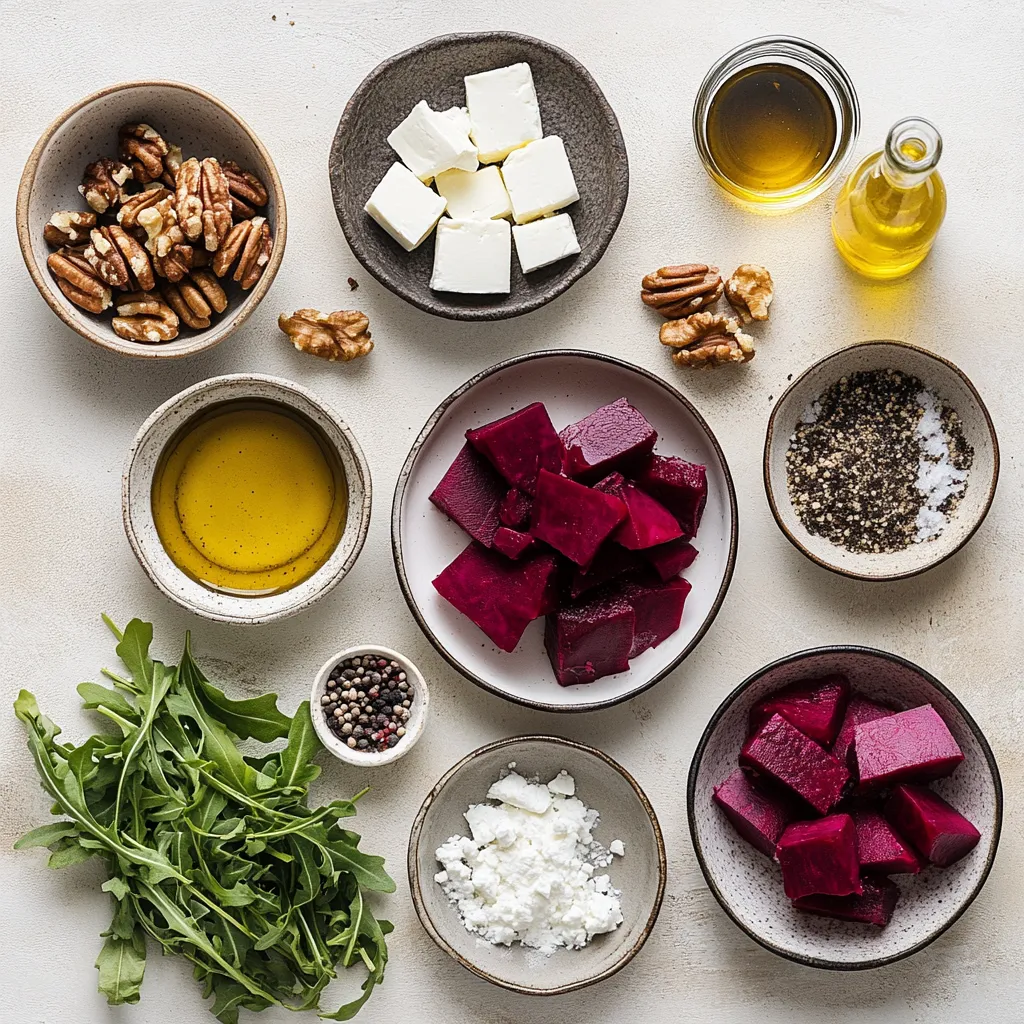
Ingredients
– Fresh Produce
– 4 medium-sized beets
– 4 cups fresh arugula
– Fresh herbs (such as dill or parsley) for garnish (optional)
– Dairy
– 1 cup crumbled feta cheese
– Nuts
– 1/4 cup walnuts, toasted and roughly chopped
– Condiments
– 1/4 cup extra virgin olive oil
– 2 tablespoons balsamic vinegar
– 1 tablespoon honey
– Seasoning
– Salt and freshly cracked pepper to taste
Instructions
1. Preheat Your Oven: Begin by preheating your oven to 400°F (200°C) to prepare for roasting the beets.
2. Prepare the Beets: Rinse the beets thoroughly under cold water to remove any soil and debris. Wrap each beet individually in aluminum foil, ensuring they are tightly sealed to retain moisture. Arrange the wrapped beets on a baking sheet for easy handling.
3. Roast the Beets: Place the baking sheet in the preheated oven and roast the beets for 45-60 minutes. They are done when a fork or knife can easily pierce through the largest beet. Once cooked, remove them from the oven and allow them to cool slightly.
4. Peel the Beets: After the beets have cooled enough to handle, use your hands or a paper towel to gently rub off the skins. Cut the peeled beets into bite-sized cubes and set them aside for later.
5. Prepare the Dressing: In a small mixing bowl, combine the extra virgin olive oil, balsamic vinegar, honey, and a pinch of salt and pepper. Whisk the mixture vigorously until all the ingredients are well blended and emulsified.
6. Assemble the Salad: In a large mixing bowl, combine the fresh arugula, roasted beet cubes, and toasted walnuts. Drizzle the prepared dressing over the salad and gently toss everything together until well coated.
7. Add the Feta: Sprinkle the crumbled feta cheese generously over the top of the salad for a creamy contrast.
8. Garnish and Serve: For an added touch of flavor and color, garnish with fresh herbs such as dill or parsley if desired. Serve the salad immediately for the best taste and texture. Enjoy your vibrant creation!
Preparation Steps
Preheating the Oven
Preheating your oven is crucial to achieving a perfectly roasted beet. A properly heated oven ensures that the heat will envelop the beets evenly, resulting in a tender and flavorful outcome. If you place the beets in a cold oven, the cooking time will increase, and they may roast unevenly, which could lead to undesirable textures.
Cleaning the Beets
Cleaning the beets is an essential step to prepare them for roasting. The ideal method involves rinsing them thoroughly under cold water, ensuring that all soil and debris are removed. Beets tend to hide small particles, so giving them a good scrub will improve the overall cleanliness and taste of your salad, as you want the earthiness of the beets without gritty textures.
Wrapping the Beets
Wrapping the beets individually in aluminum foil not only helps retain moisture during roasting but also preserves their natural sweetness. This method prevents them from drying out and encourages even cooking. The foil acts as a barrier, allowing steam to build up within, which helps tenderize the beets without additional water or ingredients that could dilute their flavor.
Roasting Time
Roasting time for beets typically ranges from 45-60 minutes, depending on their size. To determine readiness, use a fork or knife; if it pierces easily through the largest beet, they’re done. Proper roasting heightens the beets’ natural sweetness and results in a lovely, tender texture that pairs wonderfully with the salad’s fresh ingredients.
Post-Roasting Steps
Cooling the Beets
After roasting, cooling the beets safely is essential to avoid burns and to allow easier peeling. Set a timer for around 10 minutes after baking, ensuring they aren’t overly hot to handle. Placing them on a cooling rack or a clean surface can help speed up the cooling process, making them ready to peel and cut in no time.
Peeling Beets
Peeling beets can be somewhat messy due to their vibrant pigment, but following a few easy steps can help minimize staining. Use a paper towel or rubber gloves to protect your hands from staining while rubbing the skin off the roasted beets. If a tough outer layer remains after rubbing, a vegetable peeler can assist in removing it easily, ensuring your beets are ready to be cubed for the salad.
Cubing the Beets
Cutting the beets into bite-sized cubes ensures that they are easy to eat and mix well with the other ingredients. For uniformity, first slice the beets into wedges and then into smaller pieces. This process allows the beets to distribute evenly throughout the salad, providing bursts of flavor and color in every bite. Uniform pieces also make the salad visually appealing.
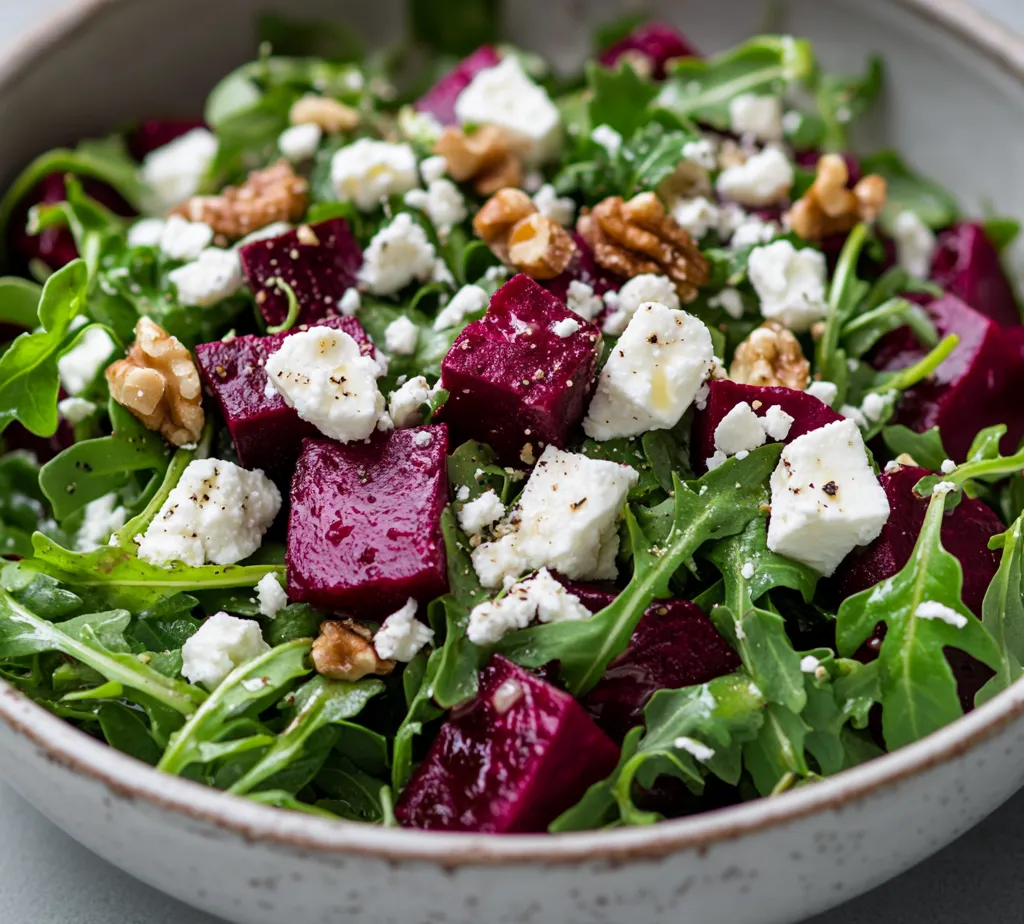
Master the art of emulsifying the dressing for a well-blended flavor.
Creating a perfectly emulsified dressing is essential for achieving a uniform distribution of flavor within the salad. The balance between the oil and vinegar is crucial; a good starting ratio is three parts oil to one part vinegar. The emulsification process can be enhanced by adding the honey, as its natural viscosity helps bind the oil and vinegar together. Whisking vigorously while slowly adding the oil into the vinegar mixture will achieve a creamy consistency. For those who prefer, an immersion blender can also be used for a smoother emulsion.
Adjusting Flavors
Customizing the dressing to suit your taste is easy and rewarding. If you desire a slightly more tart flavor, consider adding an extra tablespoon of balsamic vinegar or a splash of lemon juice for brightness. For those who prefer a sweeter dressing, an additional teaspoon of honey or even a maple syrup substitution can enhance the sweetness without compromising the integrity of the dish. Fresh herbs such as thyme or oregano can be included to further develop flavors and complement the beets.
Assembling the Salad
Mixing the Greens
Arugula serves as an excellent base due to its fresh, peppery flavor profile, providing an exciting contrast to the sweetness of roasted beets. When selecting arugula, look for vibrant green leaves free of blemishes or yellowing. The leaves should be crisp rather than wilty, indicating their freshness. Incorporating a variety of baby greens with the arugula can add extra color and nutritional value.
Incorporating the Beets
To maintain the texture of the salad, it is crucial to fold the roasted beet cubes into the arugula gently. After cutting the beets, allow them to cool to room temperature to prevent wilting the arugula. Instead of tossing vigorously, a folding motion ensures the beets maintain their shape while infusing the salad with their vibrant color.
Adding Texture with Walnuts
Toasting walnuts adds a distinct richness and enhances their flavor profile. Preheat a skillet over medium heat, then add the walnuts, stirring frequently. Toast for about 5-7 minutes, or until the nuts are golden brown and fragrant, being careful not to burn them. Once toasted, allow the walnuts to cool before chopping roughly. Featuring whole walnut pieces in the salad adds visual interest and variety in the bite.
Adding the Feta
Choosing the Right Feta
Feta cheese comes in various styles, each imparting unique flavors to the salad. For example, Bulgarian feta tends to be creamier and richer, while Greek feta, often sold in brine, holds a firmer texture and distinct saltiness. Experimenting with different types of feta can enhance the overall taste profile, so consider your palate while selecting.
Crumbling Feta
Achieving beautiful feta crumbles can be done by using your fingers to break the cheese apart gently. This technique results in rustic, uneven pieces which add a more natural look to the salad. Alternatively, a fork can also achieve crumbles if you prefer a finer texture. Avoid chopping feta with a knife as it can create a paste rather than distinct pieces.
Incorporating Feta into the Salad
When adding feta to the salad, sprinkle it on top after mixing in the other ingredients. This approach not only preserves the integrity of the cheese but also enhances visual appeal. If you prefer the feta to be more evenly distributed, gently fold it in using a spatula or large spoon, ensuring you do not mash it.
Garnishing the Salad
The Role of Fresh Herbs
Fresh herbs such as dill or parsley bring an additional layer of flavor to the salad, often elevating the taste of the dish overall. Dill’s slight anise flavor pairs well with beets, while parsley’s bright profile can offer a refreshing contrast. When garnishing, chop herbs finely to allow their flavor to permeate throughout the salad.
Visual Presentation Tips
To showcase the vibrant colors of the salad, consider serving it in a large, shallow bowl or highlighting it on a colorful platter. A sprinkle of fresh herbs atop the salad adds splashes of green, while a few whole walnuts can be scattered for added texture and visual interest.
Serving Suggestions
This salad is versatile and can be served as a side dish or a main vegetarian meal. For a complete meal, consider pairing it with grilled chicken or fish for protein, or enjoy it alongside a hearty grain dish such as quinoa or farro. The salad also serves beautifully as a starter for holiday meals or gatherings with friends.
Nutritional Benefits
Health Benefits of Beets
Beets are naturally high in fiber, vitamins, and minerals, particularly folate and manganese, making them excellent for overall health. They are known to support healthy blood pressure levels and boost stamina, making them an ideal food for athletes or those looking to improve their cardiovascular health.
Advantages of Arugula
Arugula is rich in antioxidants and provides significant amounts of vitamins A and K, essential for various bodily functions. It contains compounds linked to reduced cancer risk and promotes bone health. The addition of arugula not only enhances the salad’s taste but provides valuable nutrients.
Nutrients in Feta and Walnuts
Feta cheese is a good source of calcium and protein, contributing to bone health and muscle maintenance. Walnuts are high in omega-3 fatty acids, offering heart health benefits and anti-inflammatory properties. Together, these ingredients make the salad rich in beneficial nutrients while balancing flavor and texture.
Storage Tips
Storing Leftovers
To preserve the freshness of your salad, store any leftovers in an airtight container in the refrigerator. It is best to keep the dressing separate until you are ready to serve to avoid soggy greens. The salad can be enjoyed for up to three days, though the quality of the greens may diminish over time.
Reheating Considerations
This salad is best enjoyed chilled or at room temperature. Reheating is not recommended as heat will affect the texture of the greens and the feta. If you prefer a warm dish, consider serving the beets warm atop a bed of arugula but avoid reheating the assembled salad.
Time Efficiency
Preparing this salad aligns well with meal prep schedules. Roasting beets can be done in a batch, allowing you to use them in various recipes throughout the week, including grain bowls or wraps. The dressing can also be prepared in advance and stored, making quick assembly easy during busy evenings.
The vibrant roasted beet salad with arugula and feta is a delightful fusion of flavors and textures that brings freshness to any dining experience. The combination of sweet beets, peppery arugula, creamy feta, and crunchy walnuts creates a satisfying dish perfect for various occasions. A preparation time of just over an hour offers a wonderful balance of nutritious ingredients.
Vibrant Roasted Beet Salad with Arugula and Feta
Ingredients
- 4 medium-sized beets
- 4 cups fresh arugula
- 1 cup crumbled feta cheese
- ¼ cup walnuts toasted and roughly chopped
- ¼ cup extra virgin olive oil
- 2 tablespoons balsamic vinegar
- 1 tablespoon honey
- Salt and freshly cracked pepper to taste
- Fresh herbs such as dill or parsley for garnish (optional)
Instructions
- Preheat your oven to 400°F (200°C).
- Rinse the beets under cold water and wrap each in aluminum foil.
- Place the wrapped beets on a baking sheet and roast for 45-60 minutes.
- Once cooked, allow the beets to cool slightly before peeling.
- Cut the peeled beets into bite-sized cubes.
- In a bowl, whisk together olive oil, balsamic vinegar, honey, salt, and pepper.
- In a large bowl, combine arugula, beet cubes, and walnuts.
- Drizzle the dressing over the salad and toss gently.
- Sprinkle crumbled feta cheese on top.
- Garnish with fresh herbs if desired and serve immediately.